.png)


Automotive event safety checklist: Essential steps for compliance

TL;DR:
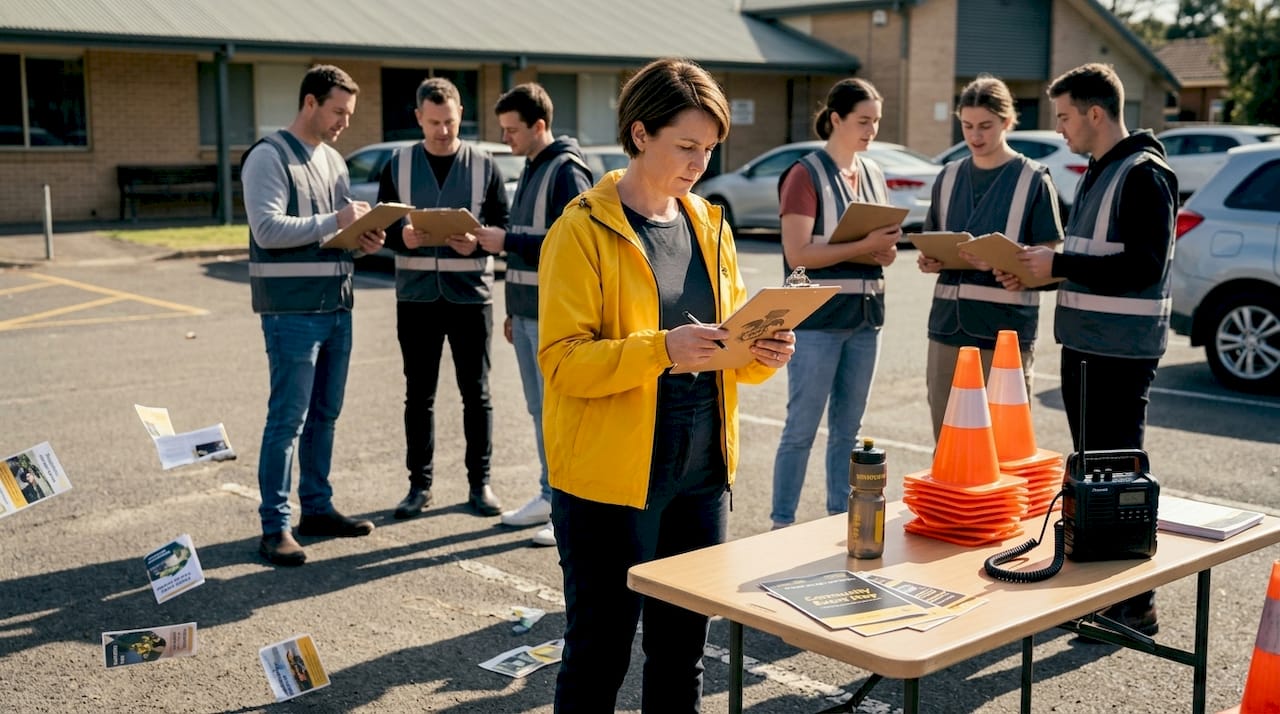
Planning and conducting safe automotive gatherings requires comprehensive vehicle inspections using frameworks like T-CLOCS and thorough site safety protocols. Both organisers and participants share responsibility, but success depends on detailed pre-event checks, on-site management, final compliance sign-offs, and post-event reviews. Clear communication, documentation, and adaptive responses are essential to prevent incidents and build community trust.
Running a local car meet or motorcycle ride is one of the most rewarding things you can do for your community. But one overlooked safety step can turn a great event into a costly incident, a fine, or worse, an injury. Organisers and participants share responsibility for ensuring every gathering runs safely and within the rules. A structured, practical checklist makes that responsibility manageable. This article walks you through the exact steps needed to plan, inspect, and sign off on a safe, compliant automotive event from the ground up.
Table of Contents
Key Takeaways
Point | Details |
Use proven frameworks | Frameworks like T-CLOCS provide a reliable starting point for checking vehicle readiness. |
Document every step | Recording inspections, briefings, and compliance checks protects both organisers and participants. |
Tailor checklists to your event | Adapt your checklist to suit the vehicles, conditions, and regulations specific to your event. |
Onsite protocols matter | Clear signage, briefings, and visible safety staff are essential for smooth event execution. |
Continuous improvement | Review safety performance after every event to spot and fix any weak points. |
How to approach safety: Frameworks and criteria
With the need for clear direction established, it’s vital to understand the key frameworks and criteria that underpin event safety. You cannot manage what you haven’t defined, and that’s especially true when vehicles, crowds, and public spaces are involved.
The most effective approach uses a standardised framework as its backbone. For motorcycle events, the T-CLOCS system is widely respected across the industry. T-CLOCS checks six critical vehicle systems: tyres and wheels, controls, lights and electrics, oil and fluids, chassis, and stands. It gives every rider and organiser a consistent, repeatable process that leaves nothing to guesswork.
For any automotive event, whether it’s a cruise night, a car show, or a group ride, five universal criteria form the foundation of a safe experience:
Vehicle readiness: Every vehicle entering the event must meet a baseline mechanical standard.
Participant briefing: All attendees need to understand the rules, routes, and emergency procedures before the event begins.
Site inspection: The venue must be assessed for hazards, access points, and crowd flow before gates open.
Emergency planning: A clear response plan for accidents, breakdowns, or medical incidents must be in place and communicated.
Compliance checks: Documentation, permits, waivers, and authority notifications must be reviewed and finalised.
Expert recommendation: Treat the T-CLOCS framework as the minimum standard for motorcycle inspections, not the ceiling. Experienced ride organisers build on it by adding venue-specific checks and rider-specific briefings tailored to the route and conditions of each event.
Documented procedures are equally important. When your process is written down, it’s repeatable, auditable, and defensible if something goes wrong. Refer to this car event planning checklist as a starting reference, and use the event type guide to tailor your approach depending on the format of your gathering.
Checklist item 1: Pre-event vehicle and equipment inspections
Armed with a clear framework, the first focus should be on thorough pre-event checks for vehicles and equipment. This is where the majority of safety incidents are either prevented or accidentally allowed to happen.
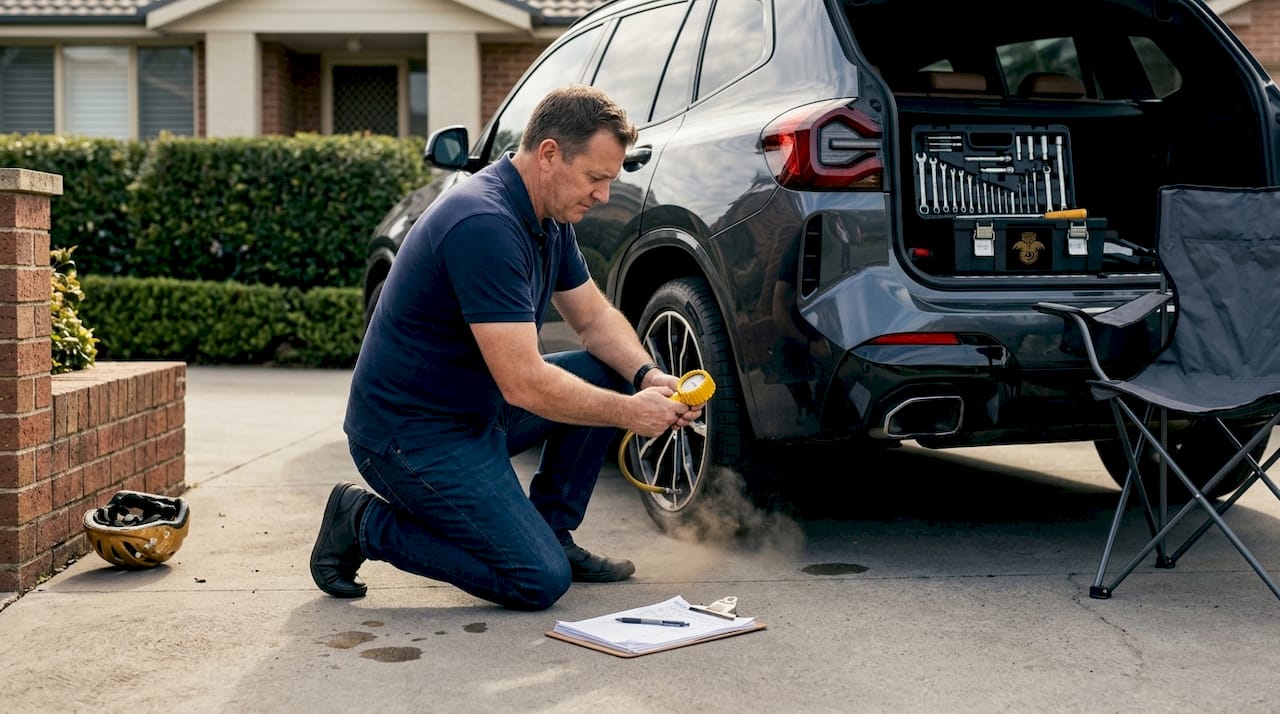
The Motorcycle Safety Foundation recommends using the T-CLOCS inspection checklist as a pre-ride standard, covering tyres, fluids, cables, chassis, lights and electronics, and stands. For cars, a parallel process applies, focusing on brakes, tyres, lights, fluid levels, exhaust integrity, and seatbelt condition.
Here is a step-by-step process that both organisers and participants should follow:
Check tyre condition and pressure. Look for uneven wear, cracking, or damage. Confirm tyre pressure matches the vehicle manufacturer’s specification.
Inspect brakes. Check pad thickness, disc condition, and hydraulic fluid levels. Listen for grinding or squealing during a slow test roll.
Verify fluid levels. Engine oil, coolant, brake fluid, and for motorcycles, clutch fluid should all be at the correct level.
Test all lights. Headlights, indicators, brake lights, and hazard lights must all function correctly before any vehicle enters an event.
Examine the chassis and suspension. Look for visible damage, unusual rust, or loose components on the undercarriage.
Confirm safety equipment. Helmets, fire extinguishers, and any event-mandated safety gear must be present and within service dates.
Record findings in an inspection log. Every check should be signed off by name and dated for compliance and insurance purposes.
Pro Tip: Experienced entrants prepare their inspection log the evening before the event, not the morning of. This gives time to address any last-minute faults without rushing or skipping steps.
The differences between car and motorcycle inspections are worth spelling out clearly. Understanding these car event safety differences helps you tailor your checklist to the specific vehicles attending your event.
Inspection area | Car priority | Motorcycle priority |
Tyres | Tread depth, pressure, condition | Tread depth, pressure, profile wear |
Brakes | Pads, discs, fluid | Pads, discs, cables, lever feel |
Lights | All exterior lights | Headlight, brake light, indicators |
Fluids | Engine oil, coolant, brake fluid | Engine oil, brake fluid, chain lube |
Safety equipment | Fire extinguisher, seatbelt | Helmet, protective riding gear |
Chassis | Undercarriage, body panels | Frame, swingarm, fork condition |
An inspection log is not just good practice. It’s a paper trail that supports your insurance claim if an incident occurs and demonstrates due diligence to authorities if your event is ever scrutinised.
Checklist item 2: Onsite safety protocols for events
After ensuring vehicles and equipment are event-ready, the next step is creating a safe environment on-site. Vehicle checks alone don’t make an event safe. The site itself needs to be managed with the same level of attention.
Mandatory onsite safety measures for any automotive event include:
Marshals and traffic management: Position marshals at all vehicle entry and exit points, and at any areas where crowds and moving vehicles interact.
Clear signage: Mark spectator zones, no-go areas, fire lanes, and emergency access routes with visible, weatherproof signage.
First aid station: A staffed first aid station with a qualified officer is non-negotiable. For larger events, consider a dedicated first aid provider.
Fire safety equipment: Fire extinguishers should be accessible near the vehicle display area, fuel storage, and the first aid station.
Emergency access routes: Keep a clear, unobstructed path for emergency services at all times throughout the event.
Delivering an effective pre-event safety briefing is one of the most underrated tools in your toolkit. Keep it to ten minutes. Cover the route or layout, the emergency plan, the location of first aid, the rules for vehicle movement, and who to contact if something goes wrong. Make it verbal and supplement it with a one-page handout or a digital message through your event communication channel.
Documenting participant compliance is just as important as the briefing itself. Attendance sheets and signed waivers create accountability and protect the organiser if a dispute arises. For tips on running tighter, better-organised events, explore these onsite event tips and this guide to social event organisation.
Safety insight: Vehicles that complete a thorough pre-inspection using frameworks like T-CLOCS six critical systems are significantly less likely to experience mechanical failures during an event. That reduced risk translates directly into fewer incidents on the day.
Pro Tip: Use a group messaging thread or a dedicated event channel to push last-minute safety updates, weather changes, or route adjustments to all participants in real time. Digital communication tools remove the guesswork and ensure no one misses a critical update.
Checklist item 3: Compliance checks and final sign-off
Once the site is ready, a thorough compliance check ensures all boxes are ticked before the event can commence. This is the final gate before the event goes live, and it deserves serious attention.
Follow this numbered process for a clean compliance review:
Review all permits and approvals. Confirm council permits, road use approvals, and any venue hire agreements are current and available on-site.
Check emergency plan documentation. The written emergency plan should name a chief warden, list emergency contacts, and detail the response process for fire, injury, or vehicle incident.
Notify relevant authorities. Local police, council rangers, or road authorities may need to be informed of the event. Confirm this has been done and keep a record of the notification.
Verify insurance coverage. Public liability insurance must be active and adequate for the expected attendance and activity level.
Conduct a final site walk-through. Walk the entire venue with your safety lead, checking signage, marshal positions, first aid location, and emergency routes.
Collect and review participant waivers. All participants must have signed a waiver before entering the event space.
Sign off on the inspection log. The lead organiser signs off on the completed inspection log, confirming all checks have been completed.
Building on the T-CLOCS inspection standard for motorcycle events, compliance sign-off should be treated as a formal handover process, not a formality. If issues are identified during this final review, the event should be delayed or modified, not pushed through regardless.
Here is a practical sign-off table your team can use on the day:
Role | Task | Status |
Lead organiser | Permits and approvals confirmed | ☐ Complete |
Safety officer | Emergency plan reviewed and distributed | ☐ Complete |
Site marshal | Venue walk-through completed | ☐ Complete |
Registration lead | All waivers collected and filed | ☐ Complete |
Insurance holder | Public liability confirmed active | ☐ Complete |
Communications lead | Participant briefing delivered | ☐ Complete |
If an issue is flagged during the final review, assign it to a specific person with a deadline to resolve it before the event opens. Do not proceed with unresolved safety issues. The reputational and legal cost of pushing ahead is far greater than the inconvenience of a short delay. For guidance on building events that earn long-term community trust, visit these event calendar tips.
Quick reference: Summary checklist for event day
With all steps examined in detail, a quick-reference summary helps ensure nothing is missed on the day. Print this out or save it to your phone.
Pre-event (day before):
Vehicle inspection completed and logged
All permits, approvals, and insurance confirmed
Emergency plan written and distributed to key staff
Participant communications sent
Arrival (on-site setup):
Site walk-through completed
Marshals briefed and in position
Signage placed at all key locations
First aid station set up and staffed
Entry and registration:
Participant waivers collected
Final sign-off table completed by each role
Safety briefing delivered to all participants
During the event:
Marshals monitoring vehicle and crowd movement
Communications channel active for real-time updates
First aid officer on duty throughout
Post-event:
Incident log reviewed (even if no incidents occurred)
Site cleared and inspected
Post-event debrief scheduled with core team
The T-CLOCS framework covering six systems is an excellent reference point for tailoring the vehicle inspection section to motorcycle-specific events. For car-focused events, weight your checklist toward brakes, tyres, and safety equipment. Mixed events benefit from a combined approach that covers both.
Stage | Organiser task | Participant task |
Pre-event | Permits, insurance, planning | Vehicle inspection, log completion |
On arrival | Site setup, marshal briefing | Registration, waiver signing |
Briefing | Deliver safety briefing | Attend and acknowledge briefing |
During event | Monitor, manage, communicate | Follow briefing rules |
Post-event | Debrief, review, archive | Report any issues observed |
Use this detailed car event checklist to extend your reference tool beyond the day itself and into the full planning cycle.
What most safety checklists miss: Lessons from real events
Even the best checklists can miss crucial real-world lessons, and experienced organisers know the difference between a form that’s been filled in and a site that’s genuinely safe. Here is an honest take on what commonly gets overlooked.
The biggest gap most checklists leave is crowd behaviour and exit planning. Vehicles leaving simultaneously at the end of an event create a concentration of risk that no pre-event vehicle check will address. Successful organisers stagger departures, brief participants on exit order, and assign marshals specifically to manage that window. It sounds minor until a near-miss happens in the carpark at 9pm.
A second blind spot is the over-reliance on paper processes instead of real-time adaptive responses. Completing a waiver form is not the same as understanding the safety rules. Walking the site once before gates open is not the same as monitoring it as the crowd builds and conditions change. The most effective safety leads conduct regular walk-throughs throughout the event, not just at the start.
Shared responsibility is also frequently misunderstood. Participants often assume the organiser has covered everything. Organisers often assume participants have done their own checks. This gap is where incidents happen. Closing it requires explicit communication at the briefing stage, making it clear that safety is a two-way commitment.
One lesson that experienced organisers know well: post-event reviews are one of the most powerful safety tools available. When you sit down after an event and honestly assess what went well and what could have gone better, patterns emerge over time. Those patterns become the basis for a genuinely better safety programme, not just a recycled checklist.
Pro Tip: Keep a dedicated event debrief document for every event you run. After three or four events, review them together. You’ll likely spot recurring issues that no single-event review would reveal.
For strategies on growing your event’s reputation and reach safely and sustainably, the insights in this event promotion guide are worth your time.
Level up your automotive event safety
Running a safe event builds trust, protects your community, and sets the standard for every gather that comes after it. If you’re ready to put this checklist into action, AutoSocial has the tools and templates to help you plan, promote, and manage events with confidence.
AutoSocial is built specifically for automotive and water sports communities across Australia. The platform connects organisers with participants, streamlines event discovery, and supports the kind of grassroots events that this community runs best. Explore the event planning resources on AutoSocial, connect with other organisers who’ve been through the process, and find your next event or start building your own. The community is already out there. AutoSocial makes it easier to find each other and do things right.
Frequently asked questions
What is the T-CLOCS inspection and why is it important?
T-CLOCS is a pre-ride inspection framework for motorcycles that checks six essential areas, including tyres, controls, lights, fluids, chassis, and stands, to confirm the vehicle is safe before any event.
Who is responsible for safety at local automotive events?
Both event organisers and participants share responsibility for safety and compliance, with organisers managing site and programme safety and participants ensuring their own vehicles and behaviour meet the event’s standards.
What are the most common safety oversights at automotive events?
Missed pre-event vehicle checks, incomplete or rushed participant briefings, and poorly managed exit procedures are among the most frequent and preventable oversights at local car and motorcycle events.
How can I adapt a safety checklist for different types of automotive events?
Adjust inspection priorities, site protocols, and briefing content based on the vehicle types attending, the venue layout, local council requirements, and the nature of the activity, whether it’s a static car show, cruise, or group ride.
Do I need to document completed safety checks?
Yes. Signed inspection logs, completed waiver forms, and written emergency plans are essential for insurance compliance, legal protection, and meaningful post-event reviews that improve safety over time.
Recommended


Comments