.png)


Car meetup workflow guide for smooth events

TL;DR:
Organizing a successful car meetup requires thorough planning, including securing landowner permission, permits, and insurance. On event day, early arrival, clear communication, active marshals, and prompt handling of issues are essential for smooth execution. Building long-term trust through consistent processes and good relationships ensures recurring success and a lasting community.
Running a car meetup without a clear car meetup workflow is a bit like showing up to a track day without checking your tyre pressures. You might get through it, but something will go wrong. Poor communication, missing permits, chaotic parking, and a handful of reckless attendees are the most common reasons meetups collapse after a single event. This guide covers everything you need before, during, and after your event, so your meetup builds a loyal community rather than a reputation for disorganisation.
Table of Contents
Key Takeaways
Point | Details |
Written permission | Securing detailed written landowner approval before promotion avoids legal issues and cancellations. |
Early organiser presence | Arriving early and actively managing arrivals sets the social tone and smooths operations. |
Clear event rules | Publishing and enforcing behavioural expectations prevents conflicts and unsafe actions. |
Plan for contingencies | Prepare for parking overflow, weather changes, and security challenges proactively to keep events running. |
Multi-year consistency | Treat meetups as ongoing projects to build dedicated communities and event reputations. |
Preparing for a successful car meetup
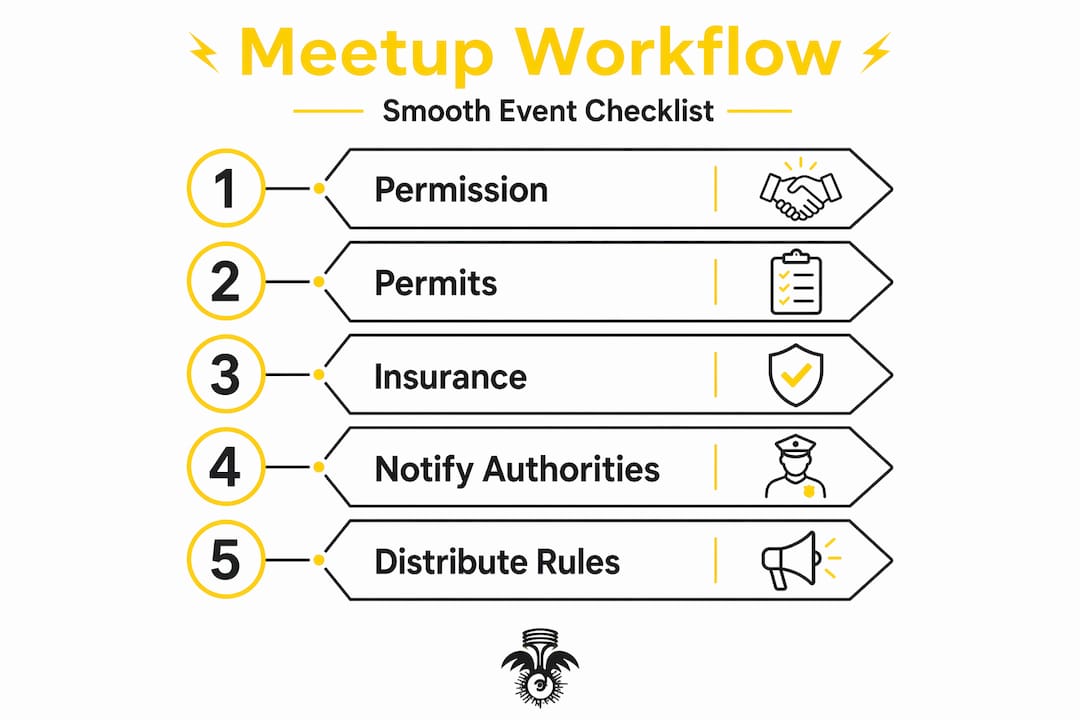
Before you post a single event flyer, you need your foundations in place. Getting the administrative side right is what separates a well-run automotive event from one that gets shut down mid-evening.
Secure written landowner permission
This is non-negotiable. Written landowner permission specifying the date, expected attendance, and planned activities is critical to avoiding legal problems. Verbal agreements dissolve the moment something goes wrong. Your permission document should cover start and finish times, the maximum number of vehicles, permitted activities (such as static displays versus engine revving), and a contact name on both sides.
Understand permit requirements
Not every meetup needs a formal permit, but many do. Special event permits are required for events with over 50 attendees or non-standard use of city property. Even private property events can attract noise, parking, or road-use regulations. Research your local council requirements early, not the week before your car show schedule kicks off.
Get public liability insurance
One incident, whether a vehicle rolls into another or a visitor trips over a cable, can end your meetup permanently. Public liability insurance protects you, your team, and the venue owner. Many venues will not grant permission without proof of coverage.

Notify police and local council
Notifying local police and council ahead of time is a courtesy that pays dividends. It helps authorities plan their resources and makes your event look credible rather than suspicious. A quick email or phone call is often enough to build goodwill before the event even starts.
Develop and distribute clear event rules
Write your rules down and share them before the day. Attendees should know expectations around driving behaviour on-site, noise levels, photography consent, and what will get them removed from the event.
Planning task | Timeline before event | Priority |
Secure landowner permission | 4 to 6 weeks | Critical |
Apply for event permits | 4 to 6 weeks | Critical |
Arrange public liability insurance | 3 to 4 weeks | Critical |
Notify police and council | 2 to 3 weeks | High |
Publish event rules to attendees | 1 to 2 weeks | High |
Confirm parking and traffic plan | 1 week | Medium |
Key pre-event checklist items at a glance:
Written venue permission with all details confirmed
Permit applications submitted and approved
Insurance policy in place and accessible on the day
Police and council notified in writing
Event rules published across all promotion channels
Marshals briefed on their roles
Pro Tip: When organising social automotive events, create a single shared document covering all planning tasks and assign a responsible person to each. Shared ownership prevents things slipping through.
With legal and planning basics handled, let’s explore how to coordinate the event day itself.
Executing the meetup: arrival to wrap-up workflow
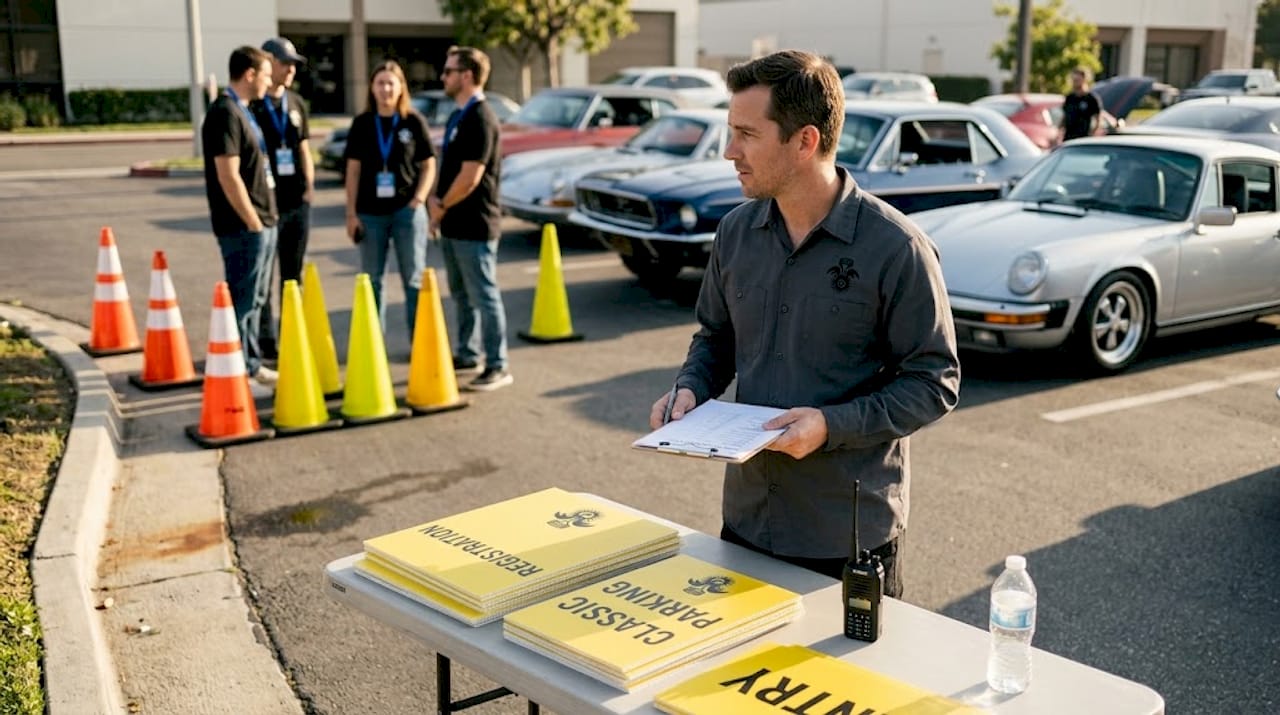
A great car meet coordination plan on paper only works if someone is physically driving it on the day. Here is a clear, time-based workflow for the event itself.
Arrive at least 30 minutes early. Organisers should arrive at least 30 minutes early and treat the first 45 minutes as active organiser time. Direct early arrivals into their spots, set up any welcome signage, and make yourself visible and approachable.
Set the culture from the first car in. The tone you establish with the first attendees ripples through the whole event. Greet people warmly, answer questions, and be clear about where vehicles should park and what the programme for the day looks like.
Communicate photography policies on arrival. Disputes over photos, particularly of number plates or personal vehicles, can create friction quickly. Post clear signage and mention the policy verbally during the first hour.
Brief marshals and keep them active. Marshals are your eyes and ears. Empower them to address noise, direct parking, and handle minor disputes. Enforcing clear rules during the meetup differentiates well-run car enthusiast events from gatherings that spiral into problems.
Manage the evening peak carefully. Crowd and traffic management challenges often increase later in the evening, which is why planned staffing or volunteer marshals matter most in the final hours. Brief your team on this in advance and rotate them if needed.
Handle reckless behaviour directly and promptly. If someone is revving aggressively, driving dangerously, or creating a disturbance, act immediately. Have a script ready: calmly inform them of the rule, give one warning, then ask them to leave if the behaviour continues. Hesitation sends the wrong signal to everyone watching.
Run a proper wrap-up. Thank vendors and partners personally before they leave. Make sure the venue is cleaner than you found it. A five-minute sweep makes a lasting impression on venue owners and improves your chances of returning.
Pro Tip: When reviewing event day management tips, the single most impactful thing you can do is physically stay visible. An organiser hiding near the food van while chaos unfolds at the entrance is the most common failure point at first-time meetups.
Key statistic: Cruise night events in some regions have required tens of thousands of dollars in additional police overtime due to unmanaged crowd behaviour. Planned marshalling and rule enforcement from the start prevents this cost from falling on organisers or local councils.
Now that the event day process is clear, let’s cover planning for common issues and ensuring ongoing meetup success.
Handling common challenges and ensuring repeat success
Every organiser hits turbulence at some point. The difference between a one-off event and a meetup that runs for years is how prepared you are when things do not go to plan.
Challenge | Reactive response | Proactive plan |
Heavy rain | Scramble to post cancellation | Set clear weather thresholds and communicate early |
Parking overflow | Attendees park on nearby streets | Pre-secure overflow areas with marshals directing |
Noise complaints | Respond to angry neighbours | Notify neighbours and businesses in advance |
Reckless driving | Remove offender after incident occurs | Publish rules beforehand, enforce from first breach |
Security incidents | Rely on police arriving | Budget for private security for large events |
Weather planning
Decide your cancellation thresholds before the event and publish them. “We will run in light rain but cancel if there is a severe weather warning issued by midday” is far more useful to attendees than an ambiguous post three hours before kick-off. Pre-identified parking overflow and clear weather decision criteria are essential proactive steps. Attendees appreciate certainty even when the news is disappointing.
Parking overflow
Overflow parking must be identified and confirmed before event day, not improvised when the car park fills up. Walk the site in advance, note secondary areas, and prepare simple printed signs. Assign a marshal specifically to the entrance to direct traffic from the moment the event opens.
Community and neighbour relations
Noise complaints and traffic concerns are preventable through planning and open communication with neighbours and local businesses. Send a brief, friendly note to nearby businesses explaining when the event runs, what to expect, and who to call if they have concerns. This small gesture transforms potential antagonists into supporters.
Security for large events
Once your car rally logistics grow beyond a couple of hundred attendees, the organiser team alone cannot manage safety. Large public car events may require funding for police or private security staffing. Include security costs in your event budget early, or approach local sponsors to offset the expense.
Pro Tip: Build a community engagement strategy that keeps attendees informed between events. A single group message confirming weather status the morning of your meetup can reduce no-show rates noticeably.
With challenges managed, let’s explore how to verify event success and build a lasting meetup culture.
Measuring success and growing your car meetup community
The final phase of a strong car meetup workflow is the one most organisers skip: reviewing what actually happened and using that data to improve.
Track attendance and compare to goals
Keep a simple record of vehicle count, arrival time peaks, and how many new attendees showed up. Over three or four events, patterns emerge. You will see which promotion channels drove the most sign-ups, which time slots felt too short or too long, and whether your car club meetings are growing or plateauing.
Collect feedback directly
Ask attendees, venue owners, and any vendors for honest feedback within 48 hours of the event. A short online form works well. Ask three questions: what worked, what did not, and what they would change. The answers are almost always more useful than what you assumed.
Growth metric | What to track | Why it matters |
Attendance count | Total vehicles and attendees | Confirms whether your promotion is working |
New versus returning ratio | First-timers vs regulars | Shows community growth and retention |
Feedback score | Average rating from attendees | Identifies experience gaps quickly |
Social media reach | Post impressions and shares | Measures brand awareness for future events |
Venue relationship | Owner satisfaction rating | Protects long-term venue access |
Maintain a consistent social presence
Post event content within 24 hours while enthusiasm is highest. Share photos, tag participants where possible, and promote the next date. Consistency in your social identity builds recognition across the broader car enthusiast events scene.
Commit to regular events
This is where many organisers stumble. Starting small is fine. Consistent, multi-year events are what build meetups into community institutions with genuine cross-generational loyalty. Monthly or quarterly events, held with the same level of care each time, develop a reputation that word-of-mouth builds for you.
Review your workflow after every single event, not just the ones that went wrong
Update your planning checklist based on what surprised you
Recognise and thank your most loyal marshals and contributors publicly
Explore virtual car meet formats to engage members who cannot always attend in person
Use event feedback and growth data to set targets for your next season
Having covered practical workflows, it is time to share a perspective that separates lasting meetups from one-off events.
Why consistent workflows make or break car meetups
There is a version of car meetup planning that treats each event as its own isolated thing. You plan it, run it, and move on. That approach burns organisers out and produces stagnant attendee numbers. The more productive mindset is to treat your meetup series as a multi-year investment, where each event is one instalment in an ongoing story.
Successful meetups are deliberate multi-year investments where consistent workflows convert community gatherings into local institutions. The meetups that become landmarks in a city’s car culture are rarely the flashiest. They are the ones where the organiser shows up on a cold Tuesday night to a half-full car park with the same energy they bring to their biggest event of the year.
Consistent workflows create something else less obvious: trust. When attendees know what to expect from your event, from the parking setup to the photography rules to the music policy, they relax. They bring friends. They tell people the event is “properly run.” That reputation is worth more than any promotional budget.
The other undervalued investment is your relationship with local businesses and authorities. Organisers who treat councils and venue managers as partners rather than gatekeepers rarely get their events shut down. Building those relationships takes consistent communication over many events, not a single phone call when you need something.
The effort compounds. Season one, you are managing logistics. Season two, you have regulars doing half the work for you. By season three, your meetup is part of long-term community building that outlasts any individual organiser. That is the goal worth working toward.
Streamline your car meetup workflow with AutoSocial
Putting a solid car meetup workflow into practice is far easier when your tools match your ambitions.
AutoSocial is built specifically for automotive and water sports communities, giving you one place to organise, schedule, and communicate your events. Manage attendee information, post event rules, send real-time updates, and keep your community engaged between meetups without juggling multiple platforms. The built-in event promotion tools help you attract new attendees and retain your regulars, while community event calendars keep your schedule visible to local enthusiasts who are actively looking for their next event. If you are serious about building a meetup that lasts, AutoSocial is where that journey starts.
Frequently asked questions
Do I always need a permit to hold a car meetup?
Permits are required for events with over 50 attendees or non-standard use of city property, though private property events must still comply with local noise and parking regulations. Always check with your local council before confirming your event date.
Why is written landowner permission so important?
Skipping written permission is the single most common cause of legal problems at car meets, as verbal agreements provide no protection if a dispute arises or a venue owner changes their mind. Always get the date, attendance cap, and permitted activities confirmed in writing.
How can organisers handle reckless driving or noise complaints?
Publish your event rules before the day and empower marshals to intervene at the first breach, including asking repeat offenders to leave. Enforcing rules clearly distinguishes a well-run legal meet from the kind of gathering that attracts police attention.
What are the benefits of notifying local police and councils in advance?
Notifying police and council as a courtesy results in more cooperative oversight on the day and significantly reduces the chance your event is flagged as illegal or suspicious. It also gives authorities the chance to assign appropriate resources rather than respond reactively.
How should organisers plan for weather and parking challenges?
Set written cancellation criteria based on specific weather thresholds, communicate them to attendees well before the day, and pre-identify overflow parking with clear signage and a dedicated marshal. Certainty and clarity keep your community confident even when conditions are less than ideal.
Recommended


Comments