.png)


How local event discovery works for enthusiasts


TL;DR:
Finding local car meets and water sports events is becoming easier through AI-powered aggregation, trusted sources, and community curation. Modern platforms combine automation with human oversight to deliver accurate, current listings while conversational AI simplifies discovery via natural language queries and integration. Enthusiast calendars provide detailed operational information essential for participation, and platforms like AutoSocial streamline discovery, connection, and participation for niche communities.
Finding the next car meet, autocross day, or jetski meetup should be straightforward. It rarely is. Most enthusiasts know the frustration of how local event discovery works in practice: scattered Facebook groups, outdated forum posts, and word-of-mouth tips that arrive a day too late. The good news is that this landscape is shifting fast. A combination of AI-powered aggregation, community curation, and purpose-built platforms is changing how you find and attend the events that actually matter to you. This guide breaks down exactly how modern event discovery works, from the technology behind it to the operational details you need to actually show up ready.
Table of Contents
Key Takeaways
Point | Details |
Automated and human curation | Local event discovery relies on AI aggregation plus human review to ensure accurate, up-to-date listings. |
Conversational AI integration | Chat platforms like ChatGPT enable natural language event searching and ticket purchase in one place. |
Niche calendar details matter | Precise registration windows, check-in times, and participation rules are essential for event attendance. |
Hybrid data aggregation | Combining APIs with manual organiser uploads creates comprehensive and relevant local calendars. |
Community insight is key | Understanding organisers’ platforms and procedures helps enthusiasts successfully join events. |
Who powers local event discovery platforms and how they work
At the heart of any good local event discovery platform is a balance between automation and human oversight. Neither works well alone. Automated tools can scan dozens of sources at speed, but without curation they quickly surface stale, duplicate, or irrelevant listings. Human review keeps quality high but cannot scale to cover every event across every suburb.
The most effective model, as described in Seeker’s hyperlocal event discovery model, structures discovery as AI-driven aggregation from trusted local sources, followed by human curation and approval through a dashboard. This keeps calendars accurate and genuinely current. For automotive and water sports communities, where an event can fill up in 48 hours, that freshness is everything.
Here is how this typically plays out across the best platforms:
AI scraping and aggregation pulls event data from club websites, social pages, and community forums continuously
Trusted source networks prioritise listings from verified organisers over unverified submissions
Human moderators or organisers approve, edit, or remove listings to maintain calendar quality
Community contributions allow enthusiasts to submit events, creating a network effect where more users means broader coverage
Feedback loops let attendees flag outdated or incorrect listings, improving accuracy over time
Thinking about automotive event calendar building through this lens changes how you evaluate any platform you use. Ask yourself: does it rely on a single source, or does it pull from many? Does a real person review what gets published? The answer tells you how much to trust the listings.
How conversational AI is changing local event discovery
The local event search method is evolving beyond search bars and filter menus. Conversational AI is introducing a completely different interaction model, one where you ask a question in plain language and get a useful, contextual answer rather than a list of results to sift through.
This shift matters for enthusiasts because the old way of finding events required you to already know where to look. Conversational AI meets you where you are. Ticketmaster’s ChatGPT app lets fans discover events and compare ticket options inside the chat interface itself. Discovery, comparison, and purchase happen in one conversation. That is a significant reduction in friction.
Here is how to get started with AI-assisted event discovery:
Connect relevant apps to your preferred AI chat platform, whether that is a dedicated plugin or an integrated tool offered by an event platform
Use natural language prompts such as “Are there any car shows near Brisbane this weekend?” rather than keyword searches
Ask follow-up questions about pricing, registration, or what to bring, keeping the full planning process in one place
Set up alerts or follow-up prompts for events that are not yet published but match your interest profile
Cross-reference results with community sources to confirm accuracy before committing
Pro Tip: When using AI chat tools for local event discovery, be specific about your niche. “Automotive events near me” will return broad results. “Autocross or track day events near Melbourne in July” gets you far closer to what you actually want.
For a practical breakdown tailored to car and watercraft communities, the enthusiast’s guide to event discovery covers how to apply these tools in a niche context.
Typical structures of niche enthusiast event calendars
Understanding the new AI tools is one thing. Knowing how to read a niche event listing once you find it is another skill entirely. Enthusiast event calendars carry far more operational detail than a standard community events page, and missing any of it can mean arriving unprepared or missing your chance to compete.
A good example is how autocross clubs structure their listings. According to an MSCC AutoX event listing, club calendar listings commonly include exact times for registration windows, check-in, tech inspection, driver meetings, and lunch breaks, alongside event costs for members and non-members. These are not minor details. If you miss the tech inspection window, you do not run.
Here is what a well-structured niche event listing typically includes:
Date, location, and surface type (car park, sealed circuit, waterway)
Registration open and close times, often through a specific platform like MotorsportReg
Cost breakdown for members versus non-members, and what is included
Check-in and tech inspection windows with hard deadlines
Driver or participant briefing time, which is often mandatory
What to bring, including safety equipment, food, and payment method
Contact details for the organiser for last-minute questions
The comparison below shows how two common event types differ in their discovery and participation requirements:
Feature | Autocross / track day | Car show / cruise night |
Advance registration required | Usually yes, with strict window | Often optional or at the gate |
Technical inspection | Mandatory before competing | Rarely required |
Arrival time flexibility | Low, timed windows matter | High, rolling arrival common |
Cost structure | Member/non-member tiers | Free or flat entry fee |
Equipment requirements | Helmet, log book, safety gear | None typically |
Primary discovery channel | Club calendar, MotorsportReg | Social media, community apps |
Exploring the full range of formats in the automotive event types guide gives you a clearer picture of what each type demands before you commit to attending.
How centralised calendars aggregate local event data
Single-club calendars are useful but limited in scope. The best ways to discover events across a whole region rely on centralised community calendars that pull data from many organisations at once. These platforms solve a genuine problem: no single enthusiast can monitor twenty different club websites simultaneously.
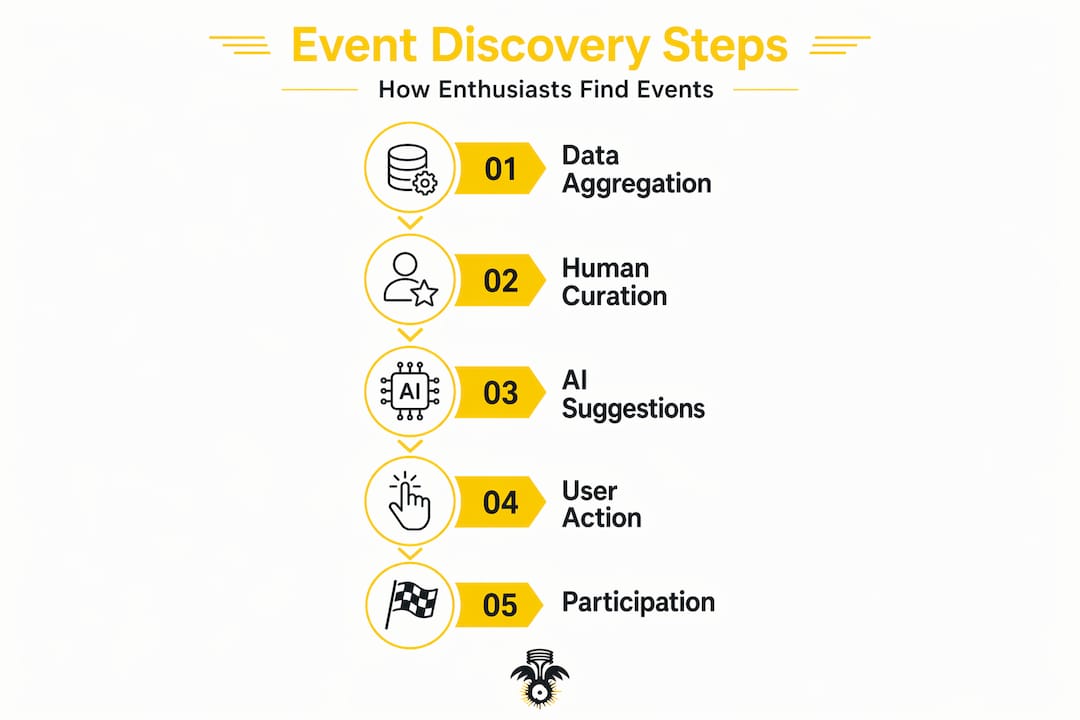
The City of Macomb’s community event calendar demonstrates how API integration and manual uploads from multiple partner organisations create comprehensive local coverage with measurable community engagement. The same architecture applies directly to automotive and water sports communities.
Data source type | How it works | Benefit |
API integration | Event data feeds automatically from organiser systems | Real-time accuracy, low admin burden |
Manual uploads | Organisers submit events directly to the calendar | Covers clubs without API capability |
Community submissions | Users suggest or add events for review | Fills gaps, boosts grassroots coverage |
Partner networks | Verified organisations feed data as trusted sources | Higher listing quality and reliability |
Pro Tip: When evaluating a community calendar platform, check whether it accepts both API feeds and manual submissions. Platforms that only accept one or the other will always have gaps. The most reliable local event recommendation system uses both.
If you organise events yourself, understanding how to reach more people is just as important as finding them. Practical advice on promoting automotive events covers how to get your listing in front of the right audience through the right channels.
Special considerations for water sports event discovery
Water sports events carry their own distinct discovery challenges. Beyond date and location, participants need to understand tide windows, launch ramp access, multi-day racing schedules, and advance purchase deadlines for catering or day passes. This level of operational detail is not always captured well by general event discovery platforms.
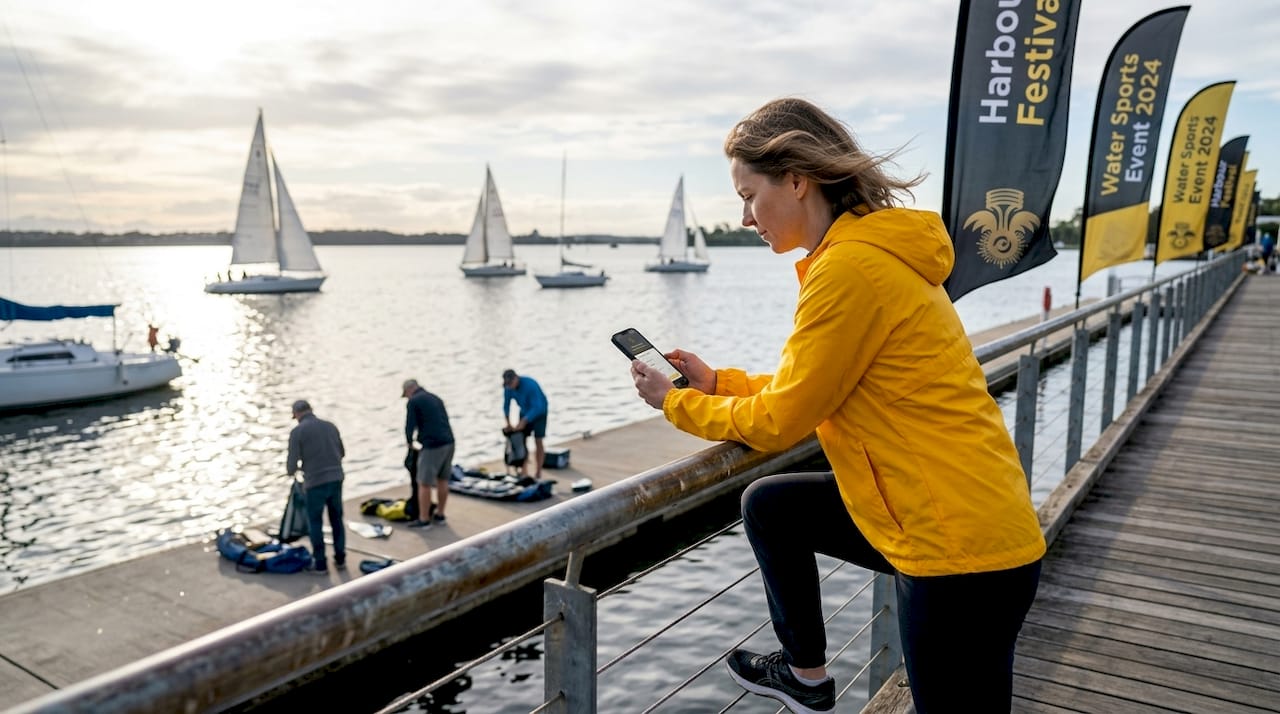
Specialised organisations managing events like regattas and jetski races publish highly detailed listings to help participants prepare. As shown in structured event listings like the Head of the Pend Oreille Regatta, water sports events publish multi-day schedules with specific race start times and hard deadlines for buying food and drink tickets in advance.
What to look for in a water sports event listing:
Multi-day schedule with race start times for each session or division
Registration and entry deadlines, which can close weeks before the event
Advance ticket purchase requirements for catering, spectator passes, or equipment hire
Ramp access and trailering information, including any permit requirements
Safety briefing times and any mandatory equipment checks
Weather contingency plans and communication channels for updates
The breadth of information required makes a purpose-built platform invaluable. A general events site simply does not capture the nuance. The dedicated guide on water sports event discovery goes deeper into how to find and vet events specific to aquatic sports in Australia.
What event discovery platforms often miss for niche enthusiast participation
Here is what most event discovery content gets wrong: it stops at the listing. Finding the event is step one. Actually participating is a different challenge altogether, and the gap between those two things is where most first-timers get caught out.
The real discovery moment for automotive enthusiasts, as any experienced autocross or track day participant will tell you, is when you learn the organiser’s registration platform and procedural rules beyond just the date and location. Different clubs use different systems. Some use MotorsportReg, others use their own websites, and a few still take entries by email. If you find the event on a community calendar but do not follow the correct registration pathway, you will not be on the start list.
Procedural details like tech inspection timing are genuinely critical. At many autocross events, the tech inspection window closes before general check-in ends. If you arrive at the check-in time listed on the flyer without realising inspection closed 30 minutes earlier, you cannot compete. No amount of good event discovery will fix that if you have not read the full listing carefully.
The uncomfortable truth is that most local event recommendation systems are built to maximise discovery, not to educate participants about what happens after they decide to attend. There is a strong case for platforms to embed operational guidance directly alongside event listings rather than leaving participants to piece it together from separate sources.
The best practice is to combine calendar use with direct contact with organisers. A quick message to the event organiser before your first attendance is not a sign of inexperience. It is the move that actually gets you on the start line or in the water on race day. Platforms that facilitate that direct connection, through group chats, organiser profiles, or Q&A features, are delivering something genuinely useful beyond a date and a map pin.
For a closer look at how good calendar design supports community engagement at every stage, building automotive event calendars explores what the best platforms do to bridge that gap between discovery and participation.
How AutoSocial can simplify your event discovery and participation journey
You now understand how local event discovery works, from AI aggregation and curated club calendars to the operational details that determine whether you actually get to compete or cruise. The next step is finding a platform built specifically for your community.
AutoSocial is built for exactly this. It centralises car meets, cruise nights, autocross days, jetski meetups, and water sports events in one place, curated for Australian automotive and water sports communities. Listings are kept accurate through a combination of community trust and organiser verification, so you are not chasing outdated information across ten different sources. You can discover upcoming events, connect with organisers directly, join private group chats, and stay updated without the noise of general social media. Whether you are looking for your first track day or organising a regular cruise night, AutoSocial keeps the community connected and the calendar current.
Frequently asked questions
What makes local event discovery platforms reliable for enthusiasts?
Reliable platforms use AI combined with human curation or trusted source networks to keep event listings accurate and current. As AI-driven aggregation with approval demonstrates, neither automation nor manual oversight alone is sufficient for a calendar enthusiasts can trust.
How does AI improve the experience of finding local events?
AI enables natural language queries and real-time interactive listings, integrating discovery and ticket options within chat platforms. Ticketmaster’s ChatGPT integration shows how discovery and ticket comparison can happen inside a single AI-powered conversation.
Are event calendars exhaustive when they rely solely on automated data feeds?
No. Successful calendars combine automated API data pulls with manual uploads from organisers to ensure broad, current coverage. Hybrid API and manual models consistently achieve more comprehensive listings than either method alone.
Why should automotive event participants pay attention to registration and check-in details?
Because registration timing and tech inspection logistics vary by organiser and directly affect whether you can compete. Missing a check-in window or using the wrong registration platform can mean missing the event entirely despite finding it in time.
How do water sports event organisers help participants prepare?
They provide detailed multi-day schedules and firm deadlines for registration and advance ticket purchases, giving participants the lead time needed to plan travel, equipment, and logistics well before race day.
Recommended


Comments