.png)


Finding local events: the enthusiast's guide to event discovery platforms


TL;DR:
AI and interactive maps revolutionize local event discovery for automotive and water sports enthusiasts.
Niche platforms offer community depth and tailored content, while general platforms provide broader event coverage.
Engaging with multiple platforms and community features builds stronger connections and enhances event participation.
Scrolling through a dozen Facebook groups, cross-referencing forum threads, and still missing that Sunday morning cruise night is a frustration most automotive and water sports enthusiasts know all too well. The good news is that a new generation of event discovery platforms has arrived, powered by AI, interactive maps, and user-generated content that actually speaks your language. This guide breaks down how these platforms work, which ones suit enthusiasts best, what they cost, and how to get the most out of them so you spend less time searching and more time out on the road or water.
Table of Contents
Key Takeaways
Point | Details |
Personalised discovery | AI-driven recommendations help enthusiasts find relevant local events quickly. |
Best-fit platforms | Combining niche and broad platforms gives automotive and water sports fans the widest event coverage. |
Advanced map features | Interactive maps and real-time notifications make event discovery and organisation simple. |
Cost awareness | Know the fee differences between popular platforms to optimise your event planning and attendance. |
How event discovery platforms work for enthusiasts
Understanding the mechanics behind event discovery platforms helps you choose the right one and use it more effectively. At their core, these platforms are built around a simple idea: make it easy for people to post events and for others to find them. But the technology behind that simplicity has grown considerably.
Event discovery platforms primarily operate through user-generated listings, search and filtering by location, category, date, and interests, with recommendations powered by AI, personalisation, and structured data integration. For automotive and water sports fans, this means you can search specifically for car meets, track days, jetski meetups, or kayaking group paddles rather than wading through generic event listings.
Here is what the core mechanics look like in practice:
User-generated listings: Organisers post events directly, including details like location, date, vehicle type, and skill level. This grassroots approach keeps content authentic and community-driven.
Location-based filtering: Interactive maps let you set a radius around your suburb or postcode and instantly see what is happening nearby.
Category and date filters: Narrow results by event type (cruise night, track day, boat rally) and timeframe so you only see what is relevant.
AI-driven recommendations: The platform learns your preferences over time and surfaces events you are likely to enjoy, even ones you might not have searched for.
Ticketing integrations: Key mechanics include location-based discovery via interactive maps, natural language search, real-time updates from web sources, and integrations with ticketing systems like Eventbrite.
For user-generated events in sports, the community aspect is particularly important. When a local car club posts a cruise or a paddleboard group organises a sunrise session, that listing carries authenticity that no algorithm can manufacture. The platform simply makes it visible to the right people.
“The best event discovery platforms don’t just show you what’s on. They show you what’s on for you, based on where you are, what you drive, and what you’ve enjoyed before.”
Pro Tip: When you first sign up for an event discovery platform, take five minutes to fill in your interests and vehicle or watercraft type. Platforms with AI personalisation will immediately start surfacing more relevant events, saving you significant search time.
Personalised event engagement is one of the strongest reasons enthusiasts are migrating away from generic social media groups toward dedicated platforms. The difference in signal-to-noise ratio is significant.
Comparing major and niche platforms for local events
Once you understand how platforms work, the next question is: which one should you actually use? The answer depends on whether you prioritise broad reach or tailored community features. There is a meaningful difference between generalist platforms and those built specifically for enthusiasts.
Eventbrite excels in ticketing and local event discovery but has limited AI and basic maps. Meetup focuses on group meetups and communities but lacks advanced search and maps for one-off events. Both are powerful tools, but they were not built with your specific community in mind.

On the niche side, specialised platforms like Ryvve aggregate car meets, shows, and track days on maps with filters, RSVPs, notifications, and club integration. That level of specificity matters when you are trying to find a modified car meet 20 kilometres from home on a Saturday afternoon.
Here is a direct comparison of the major platforms available to enthusiasts:
Platform | Map features | AI recommendations | Niche focus | Ticketing | Community tools |
Eventbrite | Basic | Limited | General | Strong | Moderate |
Meetup | Moderate | Moderate | General/groups | Basic | Strong |
Ryvve | Strong | Moderate | Automotive | Basic | Strong |
PaddleOut | Moderate | Basic | Water sports | None | Strong |
AutoSocial | Strong | Growing | Auto + water | Integrated | Strong |
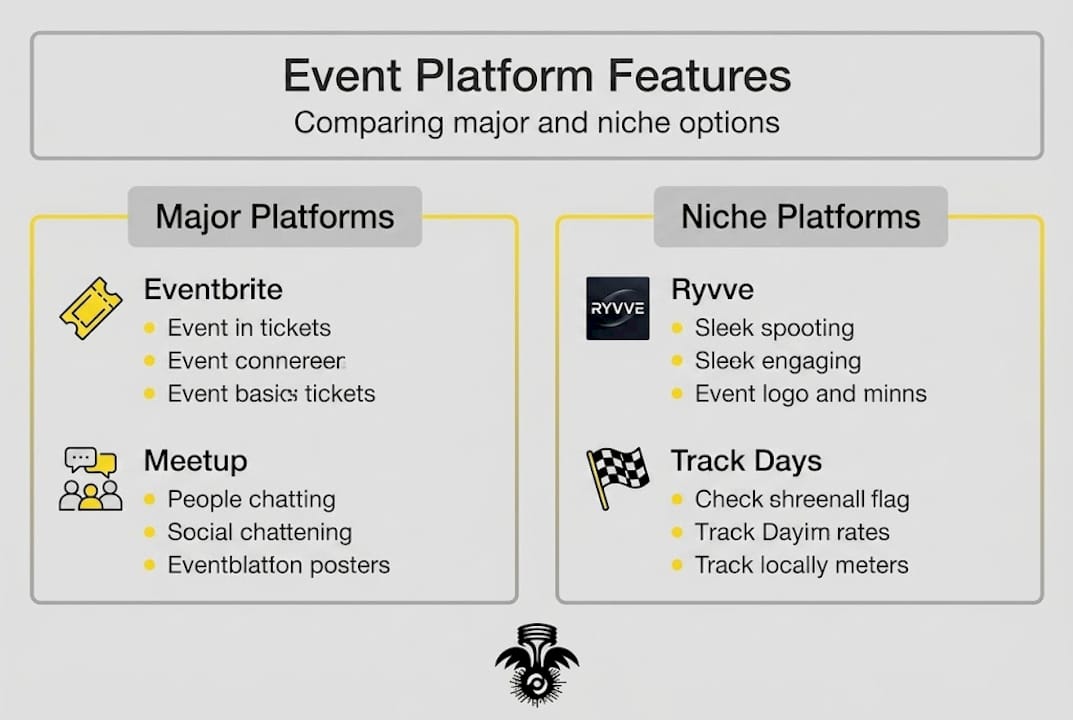
The car event platform differences become clear when you look at community tools. Niche platforms typically offer private group chats, themed profiles, and event types that reflect the culture of the community, things like mystery meets or members-only cruises that simply do not exist on Eventbrite.
Key strengths and weaknesses to keep in mind:
Eventbrite: Best for ticketed, larger-scale events. Weak on community and enthusiast-specific filtering.
Meetup: Strong for recurring group activities. Less suited to spontaneous or one-off events like a car show or jetski rally.
Ryvve: Excellent for automotive discovery. Limited water sports coverage.
PaddleOut: Tailored for paddling and water sports communities. Smaller user base in Australia.
AutoSocial: Combines automotive and water sports in one place, with community features designed for both.
Over 60% of event organisers report that attendees discover their events through mobile apps rather than desktop searches, which underscores how important app-quality maps and notifications have become for local event promotion.
For event networking in sports, the platform you choose shapes the connections you make. A niche platform puts you in a room full of people who share your passion. A generalist platform puts you in a stadium where you might find a few of them.
AI and map features: revolutionising event discovery
The technology gap between platforms is most visible in two areas: AI-powered recommendations and interactive maps. These features have moved from nice-to-have to genuinely essential for enthusiasts trying to stay across a busy local scene.
AI enhances discovery via natural language, personalisation, and real-time aggregation, but contrasting views note that newer platforms lack the user-generated depth of veterans like Meetup. This is an important nuance. A platform with sophisticated AI but a thin event database will still deliver poor results. The best outcomes come when strong AI sits on top of an active, engaged community.
Here is how modern AI and map features work together to improve your experience:
Natural language search: Type “car meet near me this weekend” and the platform interprets your intent rather than matching exact keywords. This is a significant improvement over older search tools.
Personalised recommendations: The system tracks which events you RSVP to, which you attend, and which you browse, then adjusts future suggestions accordingly.
Interactive map layers: View events as pins on a live map, zoom into your local area, and tap each pin for event details without leaving the map view.
Real-time updates: Events added in the last hour appear immediately, which is crucial for spontaneous cruise nights or last-minute meetups.
Push notifications: Set alerts for new events matching your criteria so you never miss a local car show or group paddle session.
“Interactive maps with real-time event data have fundamentally changed how enthusiasts discover local activities. The map is no longer just a feature. It is the interface.”
Pro Tip: Use the map view rather than the list view when exploring a new area or planning a road trip. You will often spot events you would never have found through keyword search alone, especially smaller community gatherings that do not have big promotional budgets.
Explore the latest car event planning tools to see how platforms are integrating these features into seamless mobile experiences. The gap between a well-built niche app and a generic platform is most obvious when you are standing in a car park trying to find out where the meet has moved to. Real-time updates and push notifications solve that problem instantly.
For enthusiasts who want personalised event tools, the combination of AI recommendations and map-based discovery creates a genuinely powerful experience. You stop searching and start being found by the right events.
Costs, market trends, and practical tips for enthusiasts
The event discovery landscape is growing fast. Understanding the market context and the cost structures of different platforms helps you make smarter decisions about where to invest your time and, in some cases, your money.
The event management market is growing at 11.8% CAGR to $32.8 billion by 2033, driven by hybrid events and AI tools. Eventbrite fees run approximately 3.7% plus $1.79 per ticket, while alternatives like Who’s In offer a flat 2.7% fee. For free community events like a local car meet or a group paddle, most niche platforms charge nothing to list or attend.
The market is expanding rapidly, and that growth is bringing more competition, better features, and lower costs for organisers and attendees alike.
Here are the practical cost considerations for enthusiasts:
Free community events: Most niche platforms allow free listings for non-ticketed events. This covers the majority of car meets, cruise nights, and informal water sports gatherings.
Ticketed events: If you are organising a track day or a paid boat rally, compare platform fees carefully. A 1% difference in fees adds up quickly at scale.
Subscription models: Some platforms offer premium memberships with benefits like early access to event announcements, priority RSVP spots, or exclusive group access.
Organisers vs. attendees: Most platforms charge organisers, not attendees, for free events. Understand who bears the cost before committing to a platform.
Pro Tip: If you are organising a free community event, always check whether the platform charges a listing fee or takes a percentage of donations. Many niche platforms are genuinely free for community listings, which makes them far more attractive than generalist platforms for grassroots organisers.
Practical tips for getting the most out of event discovery platforms:
Set your location accurately and update it when you travel. Many platforms default to your registration address, not your current location.
Follow local clubs and organisers directly on the platform so their events appear in your feed automatically.
Use car event planning tips to structure your own listings with enough detail to attract the right crowd.
Build an automotive event calendar by saving events you are interested in, even if you have not committed yet. It gives you a clear picture of what is coming up.
RSVP even for free events. Platforms use RSVP data to improve recommendations for you and to help organisers plan better.
The combination of market growth and improving technology means the platforms available in 2026 are significantly better than what existed even three years ago. Enthusiasts who engage actively with these tools will consistently find better events, build stronger connections, and spend less time searching.
What most enthusiasts miss about event discovery platforms
Here is the honest take: most enthusiasts pick one platform and stick with it, which is understandable but limiting. The reality is that no single platform has everything. Niche apps deliver community depth and tailored content, but their event databases are smaller. Generalist platforms have volume but lack the culture and specificity that make a car meet or water sports gathering feel like your scene.
The most connected enthusiasts we see are the ones running two or three platforms simultaneously, using each for what it does best. They might use a niche app for day-to-day community interaction and event discovery, while keeping an Eventbrite account for larger ticketed events and a Meetup profile for recurring group activities. That combination gives you real-time updates, broader community reach, and the depth of a dedicated enthusiast platform all at once.
The other thing most people overlook is the value of innovative event networking within the platform itself. It is not just about finding events. It is about the connections you build before and after them. Private group chats, themed profiles, and post-event discussions are where the real community lives. Enthusiasts who engage with those features consistently report stronger belonging and more repeat attendance than those who simply show up and leave.
The platforms that win long-term are the ones that understand this. Discovery is the entry point. Community is the reason people stay.
Get started with AutoSocial: your go-to for event discovery
If you have been piecing together event information from scattered Facebook groups, forum threads, and word of mouth, there is a better way.
AutoSocial brings automotive and water sports event discovery together in one purpose-built platform. Whether you are looking for your next car meet, cruise night, jetski meetup, or group paddle, AutoSocial connects you with real events posted by real enthusiasts in your area. With themed profiles, private group chats, and both public and mystery events, it is designed for the way enthusiast communities actually work. Stop searching. Start connecting. Join AutoSocial and find your next event today.
Frequently asked questions
What features do event discovery platforms offer for automotive and water sports?
Key features include map-based event listings, location and category filtering, RSVPs, notifications, and integrations for club activities. Specialised platforms like Ryvve aggregate car meets, shows, and track days on maps with filters, RSVPs, notifications, and club integration, often powered by AI for personalised discovery.
How do AI and personalisation help you find the right local events?
AI tools personalise recommendations based on your interests, location, and past activity, making event discovery more relevant and timely than manual searching. AI enhances discovery via natural language and real-time aggregation, though newer platforms may still be building the user-generated depth needed to make those recommendations truly powerful.
Are general platforms like Eventbrite better than niche apps for enthusiasts?
Niche platforms deliver tailored content and community features, but general platforms offer broader event coverage. Established platforms like Eventbrite and Meetup provide broad reach but are generalist. Enthusiasts benefit most from niche apps for targeted local discovery, with the best results often coming from using both.
How much do event discovery platforms charge for ticketed events?
Eventbrite typically charges 3.7% plus $1.79 per ticket, while alternatives like Who’s In offer a flat 2.7% fee. Most niche platforms allow free listings for non-ticketed community events like car meets and group paddles.
Recommended


Comments