.png)


How to choose the right social event platform for you


TL;DR:
A social event platform is a purpose-built digital tool that manages the full event lifecycle, from discovery to post-event networking. It features tools like map-based search, registration systems, in-app engagement, and interest-specific profiles, enhancing community connection and participation. Choosing the right platform improves event turnout, fosters genuine relationships, and supports community growth by addressing specific needs and avoiding common pitfalls.
Getting your crew together for a cruise night or a jetski meetup sounds simple enough, until you realise that the group chat is a mess, nobody saw the event post, and half your mates showed up at the wrong time. For automotive and water sports enthusiasts, the frustration of scattered event information across forums, social feeds, and messaging apps is all too familiar. This article breaks down exactly what a social event platform is, which features actually matter, and how to choose the one that fits your community perfectly.
Table of Contents
Key Takeaways
Point | Details |
Social event platforms explained | These platforms combine event discovery, management, and built-in community features. |
Core features matter | Look for robust networking, reminders, and dedicated event tools to drive engagement. |
Avoid basic ticketing-only tools | Generic or ticketing-focused apps often miss out on deeper community-building features. |
Performance impacts experience | Choose a reliable platform with low-latency and effective communication tools for active participation. |
Defining a social event platform: Beyond the basics
Now that you know why group chats and general platforms fall short, let’s break down what actually makes a social event platform unique.
A social event platform is a purpose-built digital tool that goes far beyond posting a status update or creating a Facebook event. It is designed specifically to support the full lifecycle of an event, from initial discovery all the way through to post-event community building. Think of it as the difference between having a map and actually having a guided route.
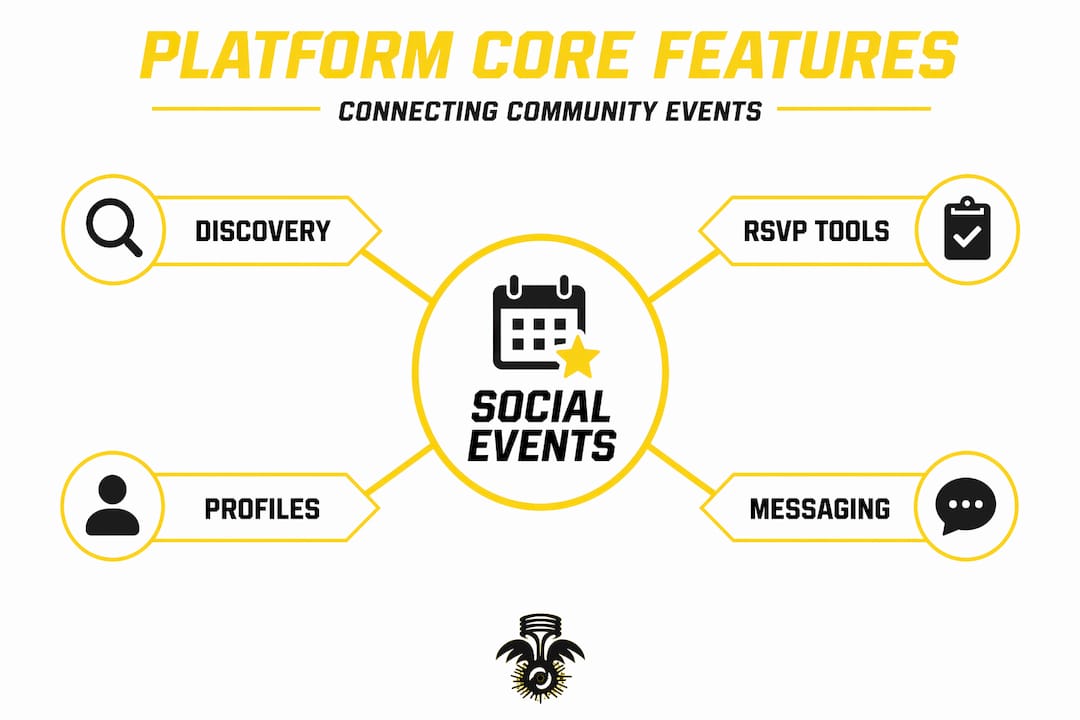
Core mechanics typically include event discovery through feeds, search, and maps; event creation and hosting tools; registration and ticketing; and participation and engagement features that keep attendees connected before, during, and after the event. These are not extras. They are the foundation.
Generic social networks handle conversation well, but they are not built for event management. Ticketing marketplaces handle transactions well, but they rarely foster genuine community. A dedicated platform for car enthusiasts or water sports lovers fills the gap between these two worlds.
Here is what sets a true social event platform apart:
Event discovery tools such as map-based search, category filters, and personalised feeds that surface relevant meetups based on your interests and location
Hosting and creation tools including event scheduling, privacy controls (public vs. private vs. mystery events), and attendee management
Registration and RSVP systems that confirm attendance, send reminders, and give organisers accurate headcounts
In-app engagement features like group chats, photo sharing, polls, and discussion threads that extend the experience beyond a single day
Community profiles that let members signal their interests, vehicles, or watercraft, making it easier to connect with like-minded people
Stat to note: Research consistently shows that events with dedicated registration tools and automated reminders see significantly higher attendance rates than those promoted only through organic social media posts.
Exploring event planning for water sports communities highlights just how much smoother an organised platform makes the entire process, from finding participants to coordinating launch times and safety briefings.
Key features that drive community connection
Understanding the basics, let’s dive into the actual features that bring these platforms to life for passionate communities.
Not all platforms are created equal. The features that matter most depend on your community’s specific needs. For automotive enthusiasts running weekly cruise nights, you need something different from a kayaking club organising seasonal group paddles. But certain features deliver value across the board.
Networking layers including matchmaking, messaging, and meeting scheduling are commonly added to community-driven event platforms to deepen connections between participants. This is where things get genuinely interesting. Rather than just knowing who attended, you can see who shares your passion for a particular make of car or who has paddled the same stretch of water as you.
Here is a comparison of key features across different platform types:
Feature | Generic social media | Ticketing-only platforms | Social event platforms |
Event discovery | Basic, algorithm-dependent | Category browsing | Map search, filters, personalised feeds |
Registration and RSVP | Minimal | Full ticketing | Integrated RSVP and waitlists |
Automated reminders | No | Limited | Yes, customisable |
Community profiles | Standard social profile | None | Interest and vehicle/craft-specific |
In-app messaging | General chat | None | Group chats, direct messages |
Matchmaking | None | None | Interest-based attendee matching |
Mystery or private events | No | No | Yes, with access controls |
The difference is significant. A platform that combines all of these elements gives both organisers and attendees a richer, more connected experience.
Pro Tip: When evaluating a platform, look for attendee profiles that allow members to list their specific vehicles or watercraft. This single feature dramatically improves the quality of connections made at any event, because people already have a conversation starter before they arrive.
Features like themed profiles and private group chats are not just nice to have. They are the reason why some communities grow from a dozen regulars into thriving groups of hundreds. Consistently showing up and finding tools that help you boost community event engagement is what separates growing clubs from stagnant ones.
It is also worth noting that automotive and water sports communities have slightly different needs. Car meets often rely on location-specific details, parking arrangements, and noise ordinances, while water sports events require weather monitoring, launch point coordination, and safety checklists. A platform flexible enough to accommodate both types of event detail gives your community room to grow in any direction.
Common pitfalls and overlooked challenges
It’s not all smooth sailing. Let’s discuss the real-world hurdles organisers and attendees might face.
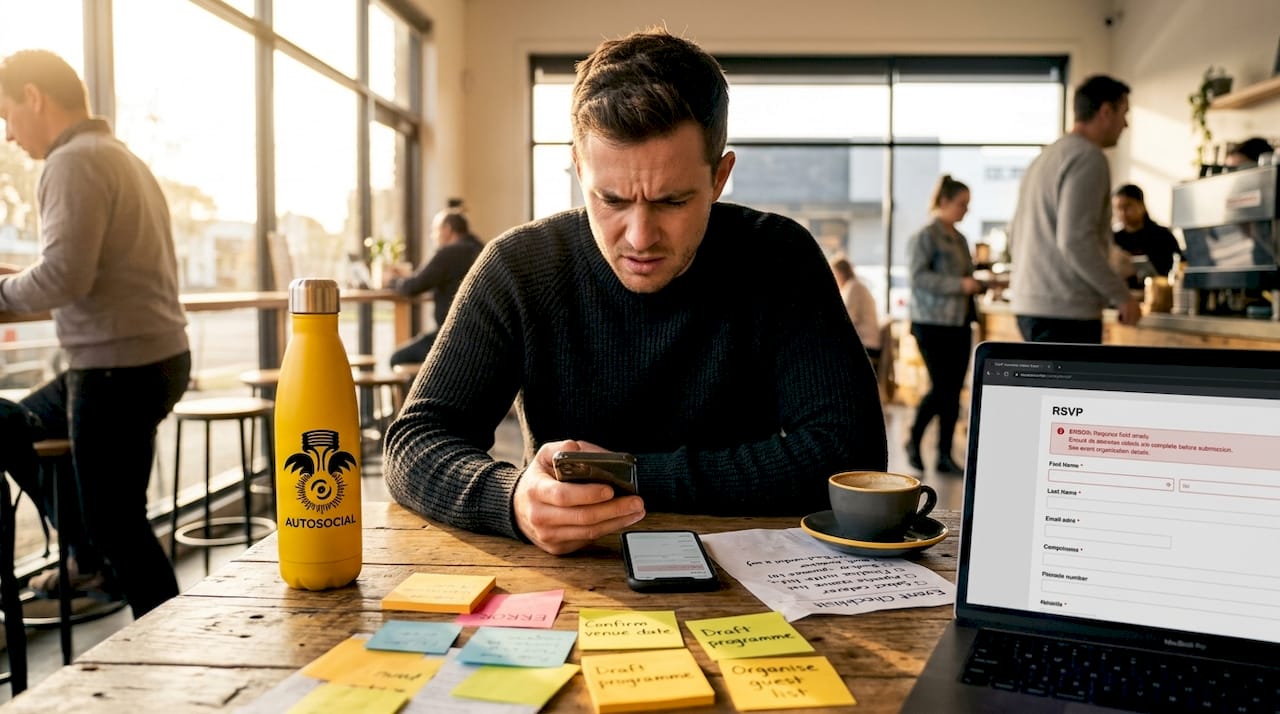
Choosing the wrong platform is one of the most common and costly mistakes a community organiser can make. Once you have built a member base on a particular tool, migrating them to a better one is genuinely difficult. That means the decision deserves more thought than most people give it.
Here are the pitfalls worth watching out for:
Choosing a pure ticketing platform for a community that needs ongoing engagement, only to discover there is no messaging, no profiles, and no way to keep people connected between events
Relying on algorithm-dependent discovery through generic social media, which means your event posts reach only a fraction of your followers on any given day
Underestimating technical reliability, particularly for larger gatherings where simultaneous RSVPs, map loads, and notifications need to work flawlessly
Ignoring privacy controls, which matter enormously for clubs that want to run invite-only events or keep their membership details away from the general public
Overcomplicating the sign-up process, which causes potential attendees to drop off before they ever RSVP
“Platforms that are primarily ticketing or distribution-focused may not provide deep networking features unless you add a separate app layer that includes messaging, matchmaking, or engagement workflows.”
This is a genuinely important distinction. A platform might look feature-rich on the surface but still leave your community without the tools they need to actually build relationships. Always ask: what happens between events on this platform? If the answer is “not much,” that is a warning sign.
Pro Tip: Before committing to a platform, run a small test event with a subset of your community. Observe the sign-up experience, the reminder system, and how easy it is for attendees to communicate with each other. Real-world testing reveals friction points that a feature list never will.
Reviewing platform alternatives for car events can give you a broader view of what is available, and reading through experiences shared by other organisers helps you avoid pitfalls before they cost you members. Communities that take the time to organise thriving auto networks tend to be the ones that approached their platform choice with genuine care.
How to choose the right platform for your community
Armed with awareness of both the biggest benefits and pain points, here is a framework to help you or your club make the best tech decision.
Matching platform features to your community’s actual event goals is the starting point. Not every club needs advanced matchmaking. But every club needs reliable notifications and a clean RSVP flow.
Matchmaking and engagement features have real performance and scalability implications. Benchmarks like low-latency interaction and robust availability are consistently cited as necessary for good matchmaking experiences, particularly when communities scale into the hundreds of active members.
Here is a practical step-by-step framework for evaluating your options:
Define your event types. Are you running weekly casual meetups, seasonal rallies, one-off charity cruises, or regular club paddles? Your event cadence shapes which features you need most.
List your must-have features. Write down the non-negotiables: RSVP, reminders, group chat, map integration, private events. Then separate the nice-to-haves from the essentials.
Assess technical reliability. Ask about uptime guarantees, notification delivery rates, and how the platform performs when many users RSVP simultaneously. Bigger events stress-test infrastructure quickly.
Check community fit. Look at the types of communities already using the platform. A platform built around automotive and water sports will understand your community’s specific needs far better than a general-purpose tool.
Test the attendee experience. Sign up as an attendee, not just an organiser. The experience your members have during sign-up and leading up to the event determines whether they come back for the next one.
Evaluate growth potential. Your community might have 30 members today and 300 in two years. Choose a platform that scales with you without forcing a painful migration later.
Consideration | Low-priority community needs | High-priority community needs |
Event frequency | Occasional, seasonal events | Weekly or fortnightly meetups |
Networking depth | Casual acquaintances | Deep connections, recurring groups |
Privacy requirements | Public, open events | Invite-only or mystery events |
Scale potential | Small, stable membership | Rapidly growing club |
Technical reliability | Informal, low-stakes | Large events, critical coordination |
Knowing how to promote auto events effectively becomes much easier when your platform handles discovery and reminders automatically. And building event calendars within a dedicated platform keeps your community informed and engaged all year round without requiring constant manual updates.
The real benefit: Why social event platforms transform enthusiast communities
Let’s step back for a moment and look at why all this technical detail really matters for your community’s future.
Here is the uncomfortable truth: most automotive and water sports communities are not struggling because their members are disengaged. They are struggling because the tools they are using were never built for them. Posting a car meet in a general-purpose social feed and then wondering why only eight people showed up is not a participation problem. It is a platform problem.
Generic group tools fragment communities in subtle ways. Someone misses an event because the notification got buried. A new member joins the group but never feels connected enough to actually attend. An organiser burns out manually chasing RSVPs across three different apps. These are not small frustrations. Over time, they erode the sense of belonging that keeps a community alive.
Purpose-built platforms change this dynamic completely. When every member has a profile that reflects who they actually are as an enthusiast, and when events are surfaced through intelligent discovery rather than algorithm chance, the quality of real-world connections improves dramatically. People show up already knowing something about each other. Conversations start faster. Friendships form more naturally.
There is also an often-overlooked benefit around organiser retention. When the logistics are handled by smart tools, the person running the event actually enjoys the process. That matters enormously for grassroots communities that rely on volunteers. A burnt-out organiser does not run the next event. A well-supported one does.
The most successful automotive and water sports communities we have seen are the ones that treated their platform choice as seriously as they treated their event planning. Effective local event promotion is not just about reach. It is about reaching the right people with the right information at the right time. A purpose-built platform makes that possible in a way that no general social network ever will.
Take your events further with purpose-built solutions
You are now ready to supercharge your event experience. Here is how to make it happen.
AutoSocial is built specifically for automotive and water sports communities across Australia, bringing together car meets, motorcycle rides, jetski meetups, and water-based events in one centralised, easy-to-use platform. Whether you are looking to discover your next local cruise night or organise a seasonal rally for your club, AutoSocial provides the tools that genuinely matter: themed profiles, private group chats, public and mystery events, and a community-first approach to event discovery.
Stop piecing together group chats, forum posts, and social media events that your members may never see. Visit AutoSocial to explore how a purpose-built platform can transform the way your community connects, gathers, and grows. Your next great event is closer than you think.
Frequently asked questions
How is a social event platform different from a regular social network?
A social event platform includes dedicated tools for scheduling, ticketing, registration, and networking that standard social networks simply do not provide. Core mechanics include event discovery, hosting tools, and participation features designed specifically around real-world gatherings.
Can I use a social event platform for both one-off events and recurring meetups?
Yes, most platforms support both formats, with scheduling tools and automated reminders that work for a single event or a series of regular meetups across the year.
Do all social event platforms include networking or matchmaking features?
No. Some platforms focus mainly on ticketing and discovery, while others add in-app matchmaking and messaging based on member profiles and interests. Ticketing-focused platforms may lack deep networking features entirely unless a separate engagement layer is added.
What performance requirements matter most for large enthusiast events?
Low-latency interaction, reliable notifications, and robust availability are the key benchmarks. Matchmaking and engagement features at scale require solid infrastructure to maintain a good experience as your community grows.
Recommended


Comments