.png)


What makes events truly social for enthusiasts

TL;DR:
Genuine social events foster meaningful connections through deliberate design, shared activities, and synchronized behaviors.
Creating relaxed, unstructured spaces alongside structured interactions encourages organic conversations and stronger community bonds.
Some automotive and water sports events feel electric from the moment you arrive. Others feel strangely hollow, even when the car park is packed and the programme looks impressive. The difference rarely comes down to budget or venue size. It comes down to how the event is designed to foster real human connection. Research confirms that genuine social events depend on specific conditions that synchronise attention, encourage interaction, and build emotional resonance among participants. This guide breaks down exactly what those conditions are and how to apply them.
Table of Contents
Key Takeaways
Point | Details |
Social events are designed | Intentional formats and structured interactions create stronger community than sheer numbers. |
Environment matters | Spaces that feel like a ‘third place’ and offer both structured and informal moments boost belonging. |
Real connections require effort | Active facilitation and repeated engagement opportunities make events feel truly social. |
Digital can be social | Online and hybrid events need synchronised engagement and purposeful timing to foster connection. |
Defining ‘social’ at enthusiast events
To move from misconceptions to useful understanding, let’s clarify what makes an event genuinely social.
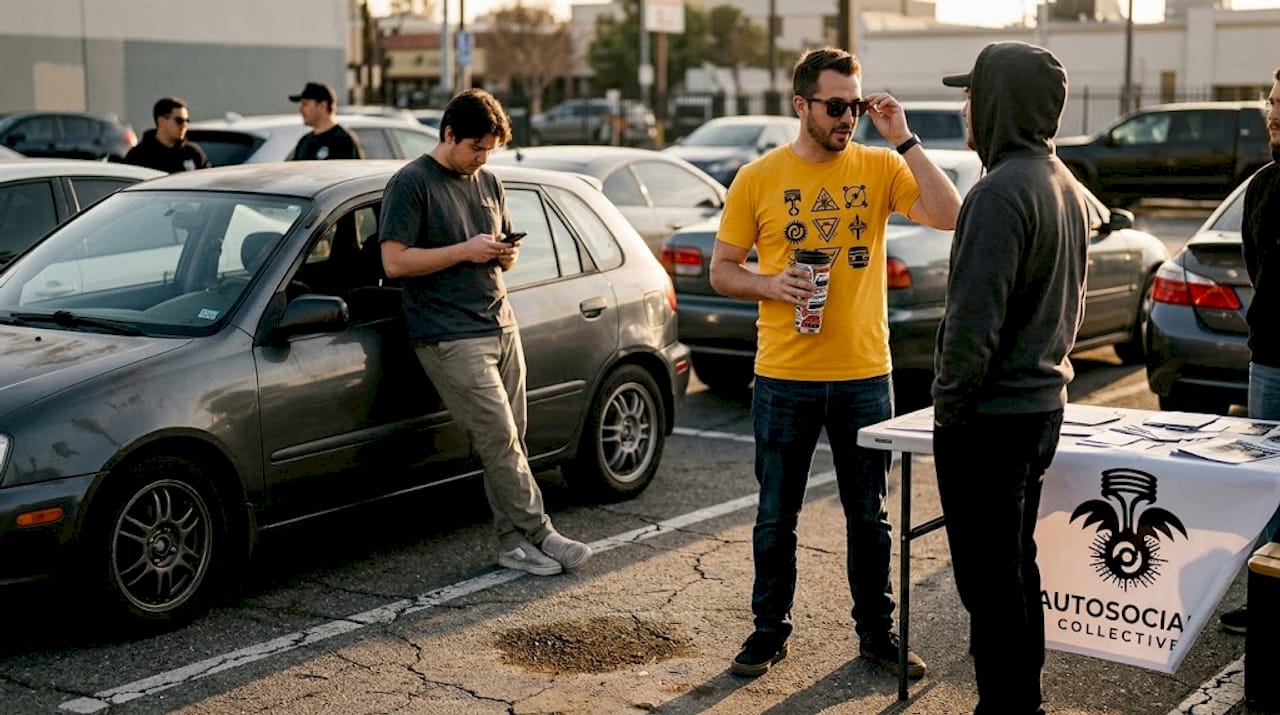
Most people assume a social event is simply one with lots of people and plenty of entertainment. A big crowd at a cruise night or a boat show with live performances can look social on the surface. But if attendees spend the evening staring at displays or scrolling their phones, something fundamental is missing. The event might be busy, but it isn’t truly social.
A genuinely social event is one where participants experience meaningful interaction, build new connections, and share moments that create a sense of belonging. These are not accidental outcomes. They result from deliberate design.
“Events become social when they create conditions for participants to experience collective effervescence through shared time and space, shared focus on symbols, synchronised actions, and emotional resonance, leading to perceived social connection and bonding.” Source
The concept of collective effervescence was first described by sociologist Émile Durkheim and refers to the heightened sense of unity and energy that emerges when a group shares a focused, emotionally charged experience. Think about the feeling in a crowd when a custom build rolls onto the show floor for the first time, or when a group of jetski riders all hit a wave together. That electric shared moment is collective effervescence in action.
There are several features commonly mistaken for social value that don’t, on their own, create genuine connection:
Attendance numbers — A bigger crowd doesn’t guarantee more interaction; it can actually reduce it by overwhelming people with too many options.
Entertainment — Live music, performers, and displays keep people occupied, but passive enjoyment isn’t the same as active connection.
Impressive venues — A stunning waterfront location or a state-of-the-art showroom sets a mood, but the environment alone won’t get strangers talking.
A packed schedule — Filling every minute with presentations can leave zero breathing room for organic conversation.
Understanding the difference between what looks social and what feels social is the essential starting point. It shifts your focus from spectacle to structure, from entertainment to engagement. For a deeper look at how different car vs motor gatherings use these dynamics differently, the contrast is often striking.
Key ingredients: how events become social
Once we understand what ‘social’ truly means, it’s time to examine the specific ingredients that bring it to life at enthusiast events.
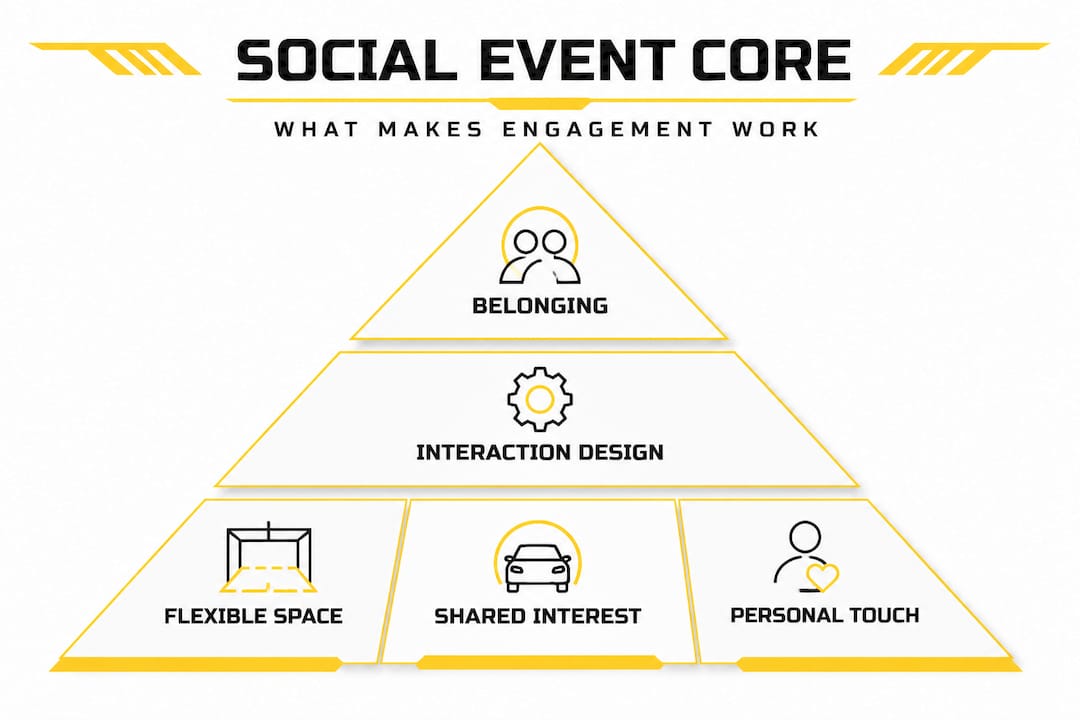
Researchers and event designers alike point to a practical framework: human-centric event design moves people from low-stakes first contact into repeated, structured interaction moments. In plain terms, this means removing the pressure of cold introductions and replacing transactional networking with formats that naturally invite conversation.
Here’s how key interaction mechanisms translate into social outcomes:
Interaction mechanism | Social effect |
Low-stakes icebreaker tasks | Reduces anxiety and opens first conversations |
Roundtable group discussions | Builds familiarity through shared problem-solving |
Synchronised group activities | Creates collective effervescence and group identity |
Audience-driven Q&A formats | Empowers attendees and boosts engagement |
Third-place open spaces | Invites organic, unforced conversation |
Pre-event digital touchpoints | Seeds connection before people arrive in person |
Key insight: Synchronised behaviour is one of the most powerful social catalysts available to event organisers. When a group of car enthusiasts all rev their engines simultaneously, or a flotilla of boats moves in formation, something shifts in the group’s emotional state. Unity forms rapidly. This is why rituals matter at enthusiast events, whether that’s a group warm-up lap, a coordinated water entry, or a shared burnout moment.
For events you are organising in the automotive or water sports space, here are practical design ideas to build in genuine socialness:
Open with a shared task rather than a keynote or a speech. Ask attendees to find someone with a different vehicle type and introduce themselves.
Use name tags with talking points, such as “I drive a [vehicle] and my favourite road is…” to prompt natural conversation starters.
Build roundtable stations around specific topics (mods, performance upgrades, local waterways) and rotate groups every 20 minutes.
Replace a Q&A panel with an audience-driven discussion where attendees pitch the topics they want to talk about.
Create a “find your tribe” zone where people can gather around their vehicle category or activity type, making it easy to meet like-minded attendees without awkward approaches.
Personalised event design goes one step further by tailoring these interaction moments to the specific interests and experience levels of your attendees, which dramatically increases the quality of connections made.
Spaces and structure: engineering social connection
The right ingredients need the right setting. Here’s how event spaces and structure shape social outcomes.
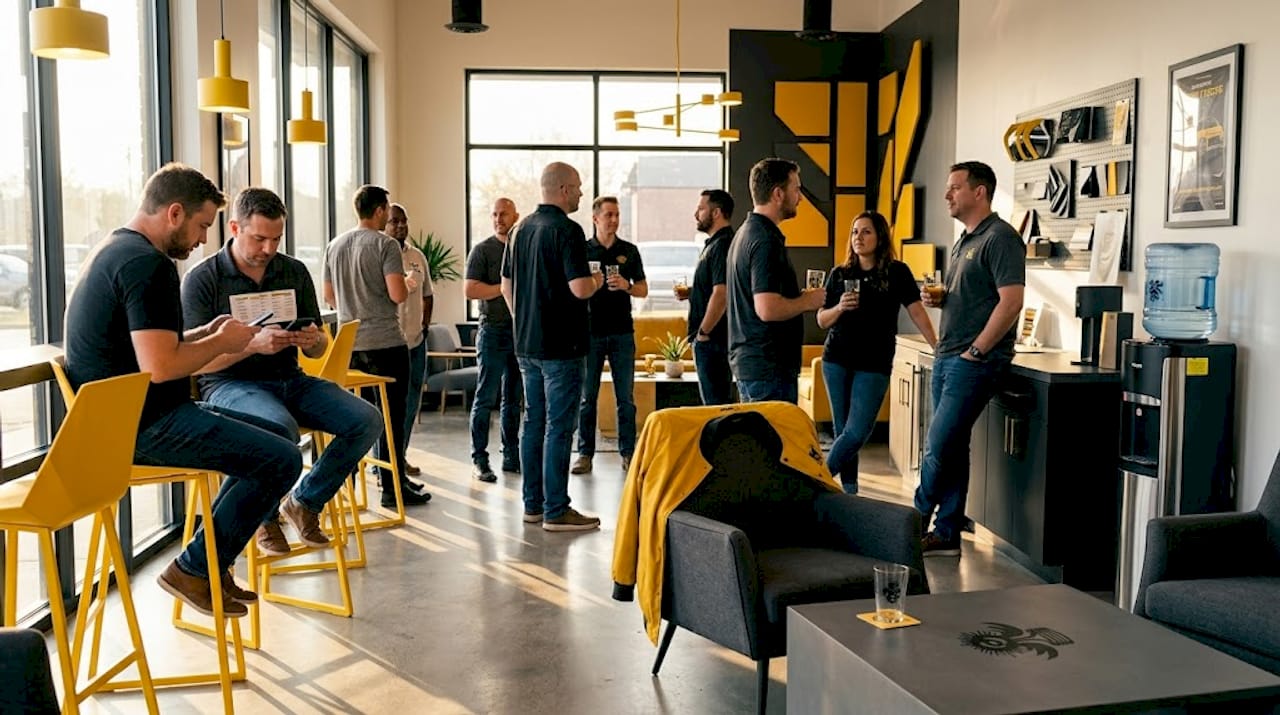
One of the most useful concepts for event organisers is the idea of a third place. Beyond home (first place) and work (second place), third places are informal social environments where people gather freely, with no fixed agenda and no performance pressure. Barbershops, parks, community halls, and waterfront promenades all function as third places. The best enthusiast events replicate this feeling.
Events designed around belonging function like third places when they include open areas for mingling, informal seating clusters, and spaces that invite people to stay and chat rather than move through efficiently. This is the opposite of the typical trade show layout, where everything channels attendees in a single direction.
Here’s a practical comparison of structured versus unstructured event formats and their social outcomes:
Format type | Examples | Social strengths | Potential weaknesses |
Structured | Workshops, roundtables, scheduled group rides | Guaranteed interaction, clear entry points | Can feel forced if not well-facilitated |
Unstructured | Open lounges, free mingling zones, shared BBQ areas | Organic conversation, relaxed atmosphere | Some attendees may disengage without prompts |
Hybrid | Structured activity followed by open social time | Combines both benefits | Requires careful scheduling and space design |
The hybrid approach consistently delivers the best outcomes. Start with a structured moment to break the ice, then release attendees into an unstructured environment where those early connections can deepen naturally.
Digital connection before the event is also critical. Pre-event forums, group chats, and social posts allow attendees to arrive already feeling like they know someone. Local event engagement improves measurably when community members have already been in conversation before the day itself.
Consider these bullet points for the physical layout of your next event:
Designate a central gathering point where attendees naturally gravitate, like a coffee station, a feature vehicle, or a floating display.
Create conversation nooks with informal seating clustered in small groups of four to six, not in long rows.
Provide a shared activity in the open area, such as a vote-for-your-favourite display or a casual skills challenge on the water.
Limit passive spectator zones so attendees spend more time among each other and less time watching a screen.
Pro Tip: Designate both a structured activity space and an unstructured mingling zone at every event you run. The structured space gets people talking; the unstructured space is where genuine friendships form. Don’t sacrifice one for the other.
Building strong automotive social networks depends on this combination of digital pre-engagement and thoughtful physical design working together.
Real-world examples: social events in the wild
To make these ideas concrete, let’s look at how top-tier enthusiast events are putting social mechanics into practice.
The 2026 Seattle Boat Show is a standout example of social event design done well. Rather than relying solely on exhibits and product demonstrations, organisers built explicit connection-focused programming into the event structure. After-dark gatherings featured live music, pour stations, and a deliberately relaxed atmosphere designed to encourage genuine mingling. On-site seminars were paired with social events, creating a rhythm that alternated between structured learning and unstructured connection time.
“The 2026 Seattle Boat Show mixed on-site seminars with after-dark social events, live music, and pour stations to create an experience that moved well beyond browsing boats into genuine shared experiences.”
What did their organisers actually do? Here’s a numbered breakdown:
Created after-hours social zones with a distinct atmosphere separate from the daytime exhibition, signalling to attendees that this time was for connection, not commerce.
Hosted owner meetups grouped by vessel type, so participants immediately had a shared talking point and a sense of tribe.
Integrated live music timed to evening sessions to set a relaxed, social mood rather than a transactional one.
Offered shared activities like skill clinics and guided water experiences that required participants to work together, building natural rapport.
Promoted the social programme separately from the main event, treating connection as a feature rather than a footnote.
The transferable lessons here are clear. Whether you’re organising a car meet, a cruise night, or a jetski gathering, you can apply the same thinking. Separate social time from display time. Give people a shared activity. Create a distinct atmosphere that signals “this is where we connect.” Check out more innovative networking event ideas for automotive and water sports gatherings to build on these principles.
What most event organisers get wrong about ‘social’
Seeing how others succeed prompts a candid look at where most efforts fall short and how you can avoid common pitfalls.
Here’s the uncomfortable truth: most event organisers spend their budget on things that look social rather than things that are social. A stunning venue, a celebrity guest, or a jaw-dropping display all generate excitement and social media content. But none of them, on their own, foster the kind of genuine connection that keeps a community coming back year after year.
The single most overlooked element is structured interaction. Many organisers assume that if they put enough enthusiasts in one place, connection will happen naturally. Sometimes it does. More often, attendees cluster with people they already know, leave feeling like they didn’t meet anyone new, and don’t come back.
The research is clear. Socialness depends on mechanisms that synchronise attention and behaviour, not just on the presence of entertainment or impressive production values. This means intentional design must come first. The venue and entertainment support the social mechanics; they don’t replace them.
Another area where organisers fall short is digital events. Online gatherings can be genuinely social, but only when the timing and interaction design are precise. A poorly run online session where participants passively watch a stream is no more social than sitting alone watching television. Effective digital events require synchronous exchanges, shared symbolic moments, and carefully timed interactive elements. Simply going live is not enough.
We’ve seen community after community in the automotive and water sports space transform their events by making one simple shift: prioritising shared moments over spectacle. The best car meets we’ve observed aren’t the ones with the flashiest builds on display. They’re the ones where someone kicks off a group story session, or where a cruise has a planned stop that gets everyone out of their vehicles and talking.
Connection trumps attraction. Every time. Build your event around that truth and the rest will follow.
Take your social events further with AutoSocial
You’ve seen how powerful intentional social event design can be. Now here’s where you can level up your own event-building with specialist support built for this exact community.
AutoSocial is the dedicated platform for automotive and water sports enthusiasts who want to discover, organise, and grow real community events. Whether you’re running a local car meet, a group jetski session, or a full-scale cruise night, AutoSocial gives you the tools to design social experiences that go beyond the ordinary. From themed profiles and private group chats to public and mystery events, the platform is built around the same principles explored in this article: structured interaction, shared experiences, and genuine connection. Visit AutoSocial to explore event calendars, community tools, and everything you need to make your next gathering truly social.
Frequently asked questions
Does a bigger crowd make an event more social?
Not necessarily. Socialness depends on mechanisms that synchronise attention and behaviour, not just the number of people present. Quality of interaction matters far more than crowd size.
How can you foster a ‘third place’ atmosphere at car or boat events?
Design open mingling spaces and informal seating clusters, and start community conversation online before the event. Third-place environments support both unstructured and structured interaction, which together produce the best social outcomes.
Are digital-only events capable of being genuinely social?
Yes, but they require precise timing and strong interaction design. Digital environments can produce collective experiences when they create synchronous symbolic exchanges and shared attention among participants.
What is the role of structured activities in making an event social?
Structured activities lower the barrier to first contact and create repeated interaction moments. Moving people from low-stakes first contact into structured interaction is one of the most effective ways to foster genuine connection at any gathering.
Recommended


Comments