.png)


Why consolidating event listings boosts community engagement
- Chris Manski
- May 1
- 9 min read


TL;DR:
Fragmented listings dilute discoverability, damage trust, and increase community confusion.
Consolidation centralizes event details, improves accuracy, and boosts community engagement.
Effective data standardization and regular audits are essential for maintaining a reliable event calendar.
Picture this: you’ve blocked out a Saturday morning for a jetski meetup you spotted in a Facebook group three weeks ago. You arrive at the boat ramp, and nobody’s there. Turns out the event was rescheduled, but only the Instagram post was updated. The Facebook listing still showed the original time. Sound familiar? For automotive and water sports enthusiasts, fragmented event listings aren’t just a minor irritation — they’re the reason communities shrink instead of grow. This guide cuts through the noise to explain why consolidating your event listings is one of the most powerful moves any organiser or platform can make for their community.
Table of Contents
Key Takeaways
Point | Details |
Consolidation reduces confusion | Merging listings prevents missed events and conflicting information for attendees. |
Boosts discoverability | Centralised calendars make finding automotive and water sports events effortless. |
Enhances community engagement | Easier event planning leads to stronger, more active groups. |
Technical accuracy matters | Proper data management keeps event calendars clean and organiser reputations intact. |
Informal platforms play a role | Combining official and grassroots listings supports maximum participation and reach. |
The hidden challenges of fragmented event listings
Having set the context, let’s examine why scattered listings are more than just an inconvenience.
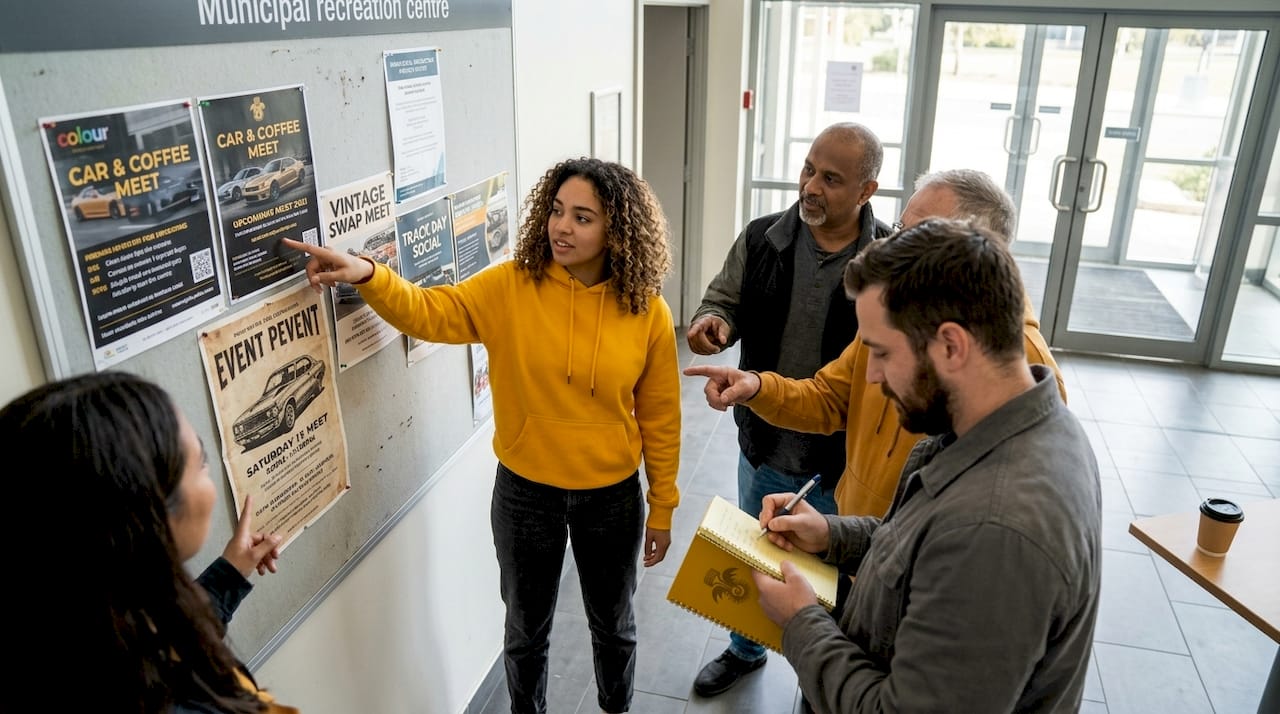
Most enthusiasts don’t think about the backend of event discovery. You search, you find something, you show up. But when listings for the same car meet exist across five different platforms with slightly different details on each one, the entire system starts to crack. The problem isn’t that more listings equal better discovery. In fact, the opposite is often true.
“Fragmented listings don’t amplify your reach — they dilute it. Duplicate entries confuse search engines, mislead attendees, and quietly erode the trust that took your community years to build.”
Consolidation eliminates duplicate listings, preventing SEO dilution, customer confusion from inconsistent details, and unmanageable reputation issues for event organisers. When the same cruise night appears on three platforms with three different start times, search engines struggle to determine which version is authoritative. Rankings drop, and your event becomes harder to find organically.
Here’s what fragmentation actually costs you:
Duplicate listings pull potential attendees in different directions, splitting RSVPs and making attendance prediction unreliable
Inconsistent details (dates, locations, entry fees) damage organiser credibility and cause real-world confusion at the gate
SEO dilution means your event competes against itself in search results, reducing overall visibility
Community frustration builds when people show up at the wrong time or place, making them less likely to trust future listings
For event discovery for enthusiasts to actually work, the foundation needs to be clean, accurate, and centralised. Every missed meet or wrongly timed ride is a small erosion of community trust. And in tight-knit communities like the Australian car and watercraft scene, trust is everything.
The real-world scenarios are easy to imagine because most seasoned enthusiasts have lived them. Someone posts a drag night on a regional forum, it gets shared to a Facebook event, someone reposts it to a local automotive group, and by Friday night there are four versions of the same listing with contradictory information. The organiser is fielding ten messages asking which address is correct. Meanwhile, half the crew doesn’t show up because they saw the cancelled version.
How consolidation improves discovery and community engagement
With the problems established, it’s time to discover the real benefits consolidation brings.
When event listings are pulled into one centralised location, something genuinely exciting happens. The friction disappears. Enthusiasts stop spending twenty minutes hunting across platforms and start spending that time actually engaging with the community. Organisers stop managing five inboxes and start building experiences.
Research confirms this effect. Sports and recreation events lead in Meetup participation, and consolidation aids in predicting success via community features. That data point matters enormously for the automotive and water sports world, because it tells us that your community already has the appetite for organised group activity. The barrier is logistics, not enthusiasm.
Here’s a clear comparison of what the experience looks like on either side of consolidation:
Feature | Fragmented listings | Consolidated listings |
Discovery time | 20+ minutes across platforms | Under 5 minutes in one place |
Accuracy of event details | Varies, often inconsistent | Standardised and verified |
RSVP reliability | Split across platforms | Centralised headcount |
Organiser workload | High, repetitive updates | Single-source updates |
Community trust | Erodes over time | Builds consistently |
SEO performance | Diluted by duplicates | Strong, unified signal |
The benefits aren’t just operational. They’re cultural. When community members can reliably find and attend events, they invite friends. They become regulars. They eventually become organisers themselves. That flywheel only starts spinning when the foundation of discovery is solid.
To boost event engagement meaningfully, consolidation needs to happen at the platform level, not just in your own head. Here’s how organisers can approach it systematically:
Choose a primary platform as your single source of truth for all event details
Mirror, don’t duplicate — link back to the primary listing rather than recreating it on every platform
Update the primary listing first before pushing changes anywhere else
Use community features like group chats and RSVP tools to centralise communication
Audit your listings monthly to catch stale or contradictory entries before they cause issues
Well-maintained automotive event calendars not only serve existing members but actively attract new ones. When a newcomer to the scene searches for a Sunday cruise near them and finds a clean, accurate, up-to-date listing, they’re far more likely to show up and become a regular.
Pro Tip: Use attendance patterns from past events to predict future turnout. Platforms that centralise RSVPs give you the data to see which event types consistently draw crowds, letting you schedule smarter and communicate more effectively.
Data standardisation and deduplication: Making consolidation work
Knowing why consolidation matters, let’s look at how it actually happens behind the scenes.
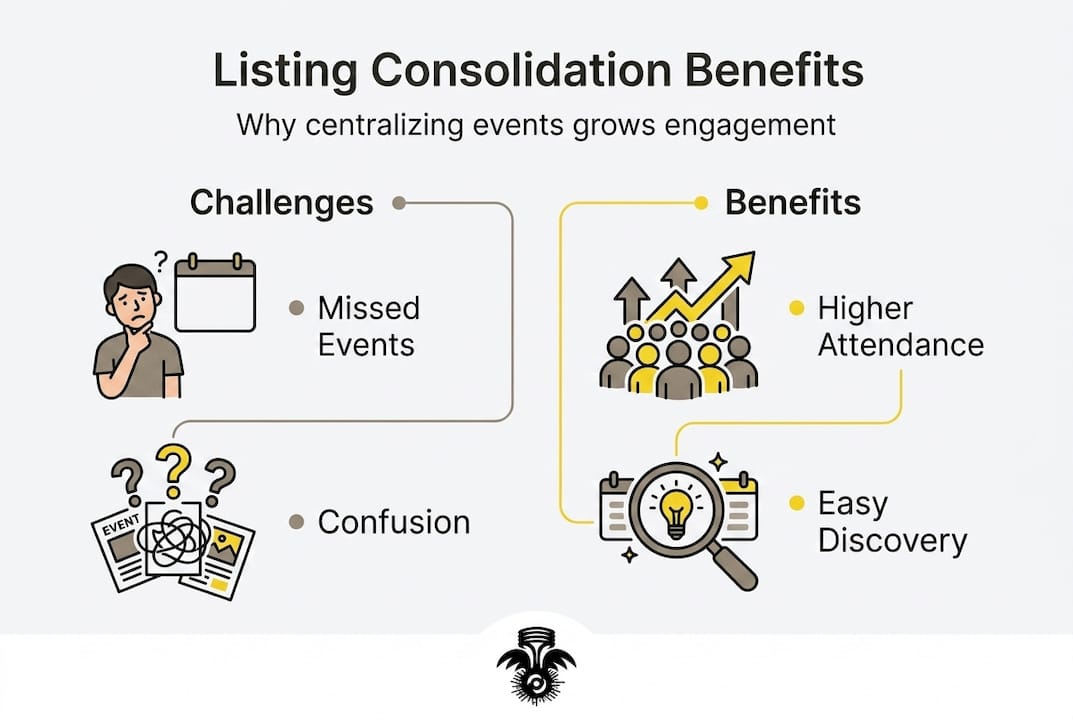
Consolidation isn’t just a philosophy. It’s a technical process. And understanding the basics helps organisers make smarter choices about the tools they use. At the core of any well-consolidated event calendar is data standardisation, which means ensuring every listing uses the same format for dates, locations, categories, and descriptions.
Data standardisation and deduplication methodologies use match scores, normalisation, presence checks, and publisher-specific rules to merge listings accurately at scale. For a platform serving automotive and water sports events, this means the system can recognise that “Southbank Car Meet — Sunday 9am” and “Car Meet @ Southbank, 9:00 AM Sunday” are the same event, and merge them into one clean entry rather than displaying both.
Here’s a look at the key components that make deduplication work:
Component | What it does | Why it matters |
Match scoring | Assigns a similarity score to potential duplicate pairs | Prevents false merges of different events |
Normalisation | Converts all entries to a standard format | Ensures consistent display across the platform |
Presence checks | Verifies mandatory fields like date, location, and title | Catches incomplete listings before they go live |
Publisher-specific rules | Adjusts logic for different listing sources | Handles quirks from Facebook, forums, and apps |
For enthusiasts and organisers using car event planning tools, the practical takeaway is straightforward: the platform you choose should handle the heavy lifting of deduplication automatically. You shouldn’t need a spreadsheet and three hours every weekend to keep your calendar clean.
When evaluating any consolidation tool, look for these capabilities:
Automated duplicate detection with adjustable match thresholds
Version history so you can see when and how a listing was updated
Source attribution that tracks where each listing originated
Bulk editing for when event series details change across multiple entries
Merge and suppress options to manage third-party listings that conflict with your own
Platforms that nail these fundamentals protect your reputation as an organiser. When every listing that goes out under your name is accurate and clean, attendees trust you. That trust is the bedrock of a thriving community, whether you’re running monthly car meets or weekly jetski sessions.
Edge cases, local success, and operational realities
Beyond the basics, there are challenges and nuances every enthusiast and organiser should know.
Even with the best consolidation tools in place, real-world event management throws up complications. Third-party listings are among the most common headaches. Someone outside your organisation submits their own version of your event to a local directory or forum, and suddenly you’ve got an unofficial listing circulating with outdated details. This isn’t hypothetical — it happens constantly in active automotive communities.
Key statistic: City-specific event success varies independently of population size, meaning a smaller regional city with strong local engagement can consistently outperform a major metro area when it comes to event attendance and community cohesion. Local culture and platform adoption matter far more than raw numbers.
This insight should reshape how organisers think about their communities. You don’t need Sydney-level membership to run a successful, well-attended event series. You need consistency, accuracy, and a consolidated discovery channel that your local crew actually uses.
Here’s a practical step-by-step for handling duplicate listings post-submission:
Identify the duplicate using your platform’s search or reporting tools
Compare the details of both listings to determine which is more accurate or complete
Choose your action: suppress the duplicate, merge the entries, or report the third-party listing to the hosting platform
Update the primary listing to reflect any accurate information captured in the duplicate
Communicate the resolution to your community so they know which listing to follow going forward
Pro Tip: Set a recurring calendar reminder every four weeks to audit your event listings. It takes under thirty minutes but prevents the kind of compounding inaccuracy that quietly drives community members away. Regular audits catch duplicates, expired events, and outdated venue details before they cause real problems.
Building stronger community ties requires more than great events. It requires the operational discipline to keep your listings trustworthy. Enthusiasts who’ve been burned by wrong-time, wrong-place experiences are harder to win back. Prevention is always easier than recovery.
Third-party duplicates also reveal something important about your community’s reach. If external sources are independently listing your events, it means you have genuine interest and word-of-mouth working in your favour. The challenge is channelling that energy into your consolidated system rather than letting it scatter across unmanaged listings.
A nuanced view: Why full interoperability still faces hurdles
With practical and technical aspects covered, it’s important to consider the broader landscape and unspoken realities.
Here’s a view that doesn’t get aired often enough: consolidation solves many technical problems, but it doesn’t automatically solve community engagement. You can have a perfectly deduplicated, beautifully standardised event calendar and still find that the most vibrant community conversations are happening in a WhatsApp group or a niche forum that nobody outside the crew has heard of.
DMOs overlook informal aggregators due to control issues and metrics gaps, and full interoperability requires unified business rules. This matters deeply for automotive and water sports communities, because so much of the culture lives in informal spaces. The real intel on a Thursday night cruise departure point often travels through private messages, not public listings.
Official directories and formal platforms bring structure and reach. But grassroots listing channels bring authenticity and speed. The most effective approach isn’t choosing one over the other — it’s running both in parallel, with a consolidated platform as the anchor.
How car events stand out from generic social gatherings is precisely this blend of official structure and informal culture. The burnout nights that become legend in a city’s car community often start as a word-of-mouth whisper and grow into a ticketed event. A hybrid approach honours that journey while still providing the discoverability that formal consolidation offers.
The uncomfortable truth is that no single platform will ever capture 100% of community activity. What a good consolidated platform can do is serve as the reliable reference point that everyone knows to check. When your crew trusts one calendar above all others, the informal channels reinforce it rather than compete with it. That’s the equilibrium worth building toward.
Take your event calendar to the next level
Recognising the strategic benefits of consolidation is a meaningful first step, and now it’s time to put those insights into action. Whether you’re running monthly car meets, coordinating group jet ski sessions, or planning a series of coastal cruises, having a centralised platform purpose-built for your community makes every part of the process smoother.
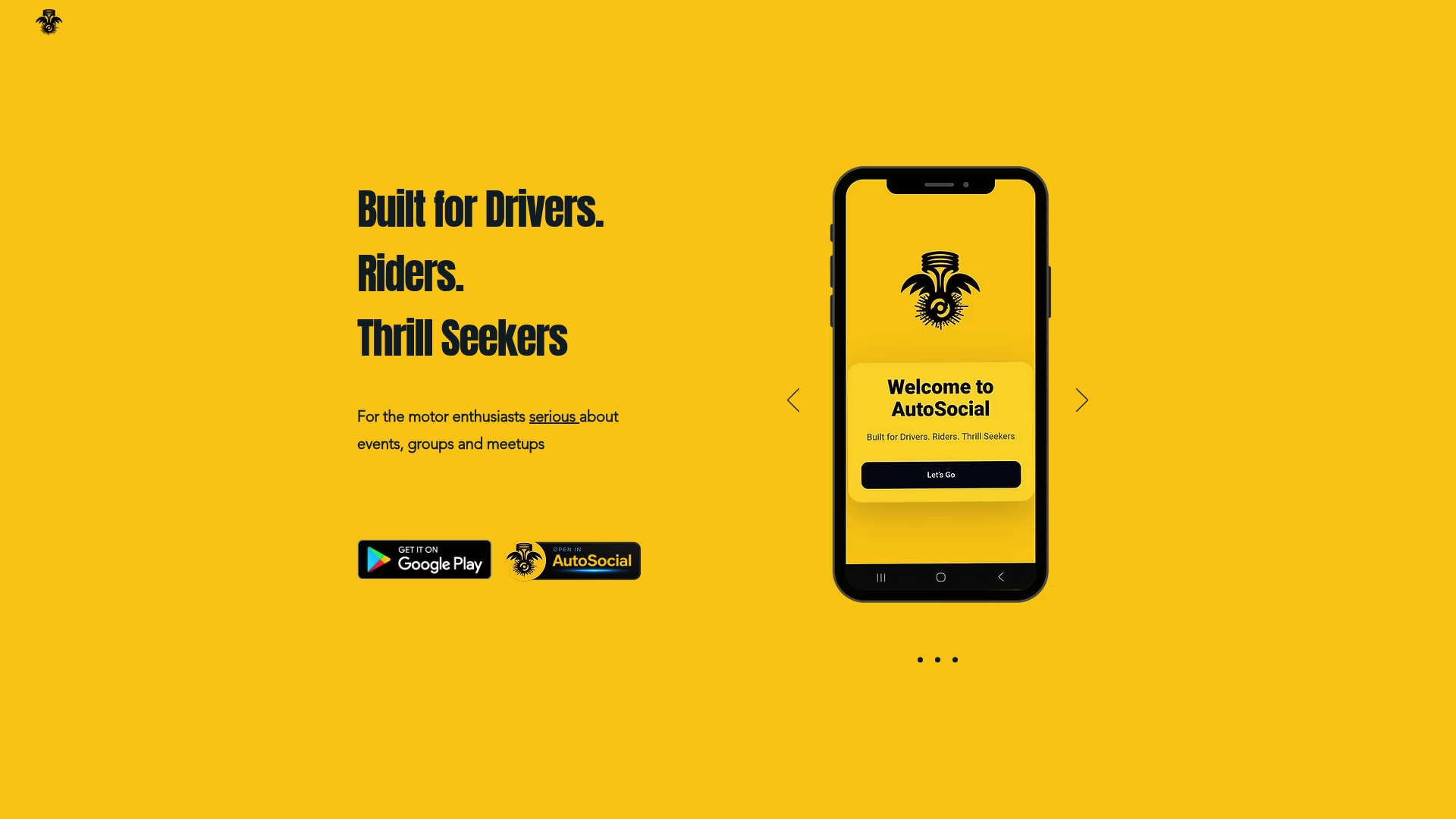
AutoSocial is built specifically for automotive and water sports enthusiasts who want more than a generic events page. It brings together event calendar centralisation, community profiles, private group chats, and both public and mystery events into one cohesive space. No more chasing scattered listings or managing conflicting details across platforms. AutoSocial gives your community a reliable home base for discovery, planning, and genuine connection. Explore what a consolidated, community-first approach to event planning can do for your crew.
Frequently asked questions
How does consolidating event listings improve community engagement?
Consolidation makes events easier to find, which directly increases attendance and fosters stronger connections among enthusiasts. Sports and recreation events lead in Meetup participation, and unified platforms help organisers predict success and build consistent community momentum.
What technical steps are needed for effective event listing consolidation?
Effective consolidation requires standardising data formats, applying match scores and presence checks to detect duplicates, and using publisher-specific rules to merge entries accurately across different source platforms.
Can city size influence event listing success after consolidation?
City size is far less important than you might expect. City-specific success varies independently of population size, meaning local engagement levels and publisher thresholds are the real drivers of a well-performing consolidated calendar.
Are there risks to ignoring informal aggregators when consolidating listings?
Absolutely. Ignoring informal aggregators risks losing touch with grassroots community activity, which often holds the most authentic and timely event information. Full interoperability also requires aligning business rules across both formal and informal channels to bridge the gap.
Recommended


Comments