.png)


How platforms power better automotive and water sports events

TL;DR:
Managing automotive and water sports events with generic tools leads to chaos, inefficiency, and higher no-show rates. Specialized platforms offer tailored features like drive planning, live scoring, and automated eligibility checks, significantly improving attendance and revenue. A hybrid approach balances automation with personal touch, enabling organisers to create memorable, well-managed gatherings efficiently.
Running a car meet or water sports event on a Facebook group and a shared spreadsheet might feel familiar, but it’s increasingly a recipe for chaos. Enthusiast communities have grown sharper in their expectations, and the tools that once just about managed a cruise night for twenty friends are buckling under the weight of today’s gatherings. Dedicated platforms built specifically for automotive and water sports communities are changing what’s possible, from slashing no-shows to generating real revenue, and the organisers who’ve made the switch are wondering why they waited so long.
Table of Contents
Key Takeaways
Point | Details |
Save time and money | Platforms help organisers handle more events with less effort and lower costs. |
Specialised features matter | Tailored tools for car and water sports events boost engagement and attendance. |
Data drives success | Real-time analytics make it easier to plan better and prove event ROI. |
Hybrid approaches work | Combining tech and hands-on touch ensures complex events run smoothly. |
The real challenge of running automotive and water sports events
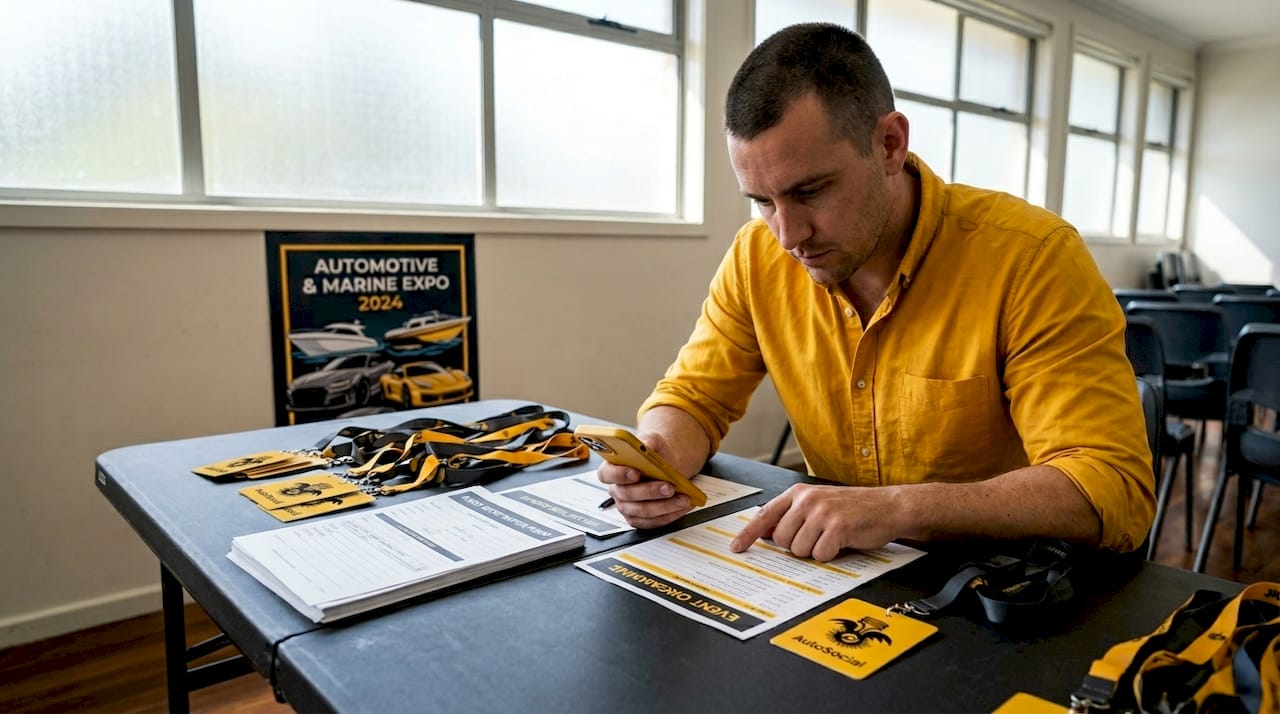
Ask any veteran car meet organiser what their biggest headache is, and the answer rarely involves the cars themselves. It’s the administration. Managing RSVPs across three different messaging apps, chasing down entry fees via bank transfer, printing name tags the morning of the event, and then fielding a dozen “are we still on?” messages when the weather looks iffy. These are the everyday realities of grassroots event organising, and they consume time that should go into building something memorable.
Water sports events carry their own set of complications. Jetski meetups need water access coordination. Rowing tournaments require scheduling across multiple heats, volunteer rostering, and real-time scoring. Surf club events need safety checks and eligibility verification. The operational load is significant, and it only grows as attendance does.
Here’s what many organisers are dealing with on a regular basis:
Manual communication overload: Sending individual messages to confirm attendance, share updates, and handle last-minute changes.
No-show rates: Unconfirmed attendees who disappear on the day, leaving gaps in carefully planned schedules.
Ticketing headaches: Managing payments through informal methods with no audit trail or automated refund process.
Volunteer coordination: Tracking who’s rostered for what, especially across multi-day events.
Eligibility and safety checks: Verifying that participants meet requirements without a centralised system.
The impact of poor event management isn’t just frustrating; it’s expensive. Research shows that tournament scheduling platforms handle real-time scoring, volunteer management, and eligibility checks, enabling organisers to move from running two events per week to six or more. That same shift cut no-shows by 50%, representing approximately $145,000 in staffing savings across a season.
That’s not a marginal improvement. That’s a transformation. And it’s the kind of outcome that’s now within reach for automotive and water sports communities when they invest in the right tools. Keeping track of these events is also easier when you have access to automotive event calendar tools that centralise everything in one place.
Why specialised platforms change the game
Not all event platforms are created equal. A generic tool like Eventbrite or a custom Google Form might handle ticket sales for a music festival, but they don’t understand what a car meet actually needs. They don’t know about drive routing, cruise-night themes, or the importance of showcasing specific vehicle categories. They weren’t built with water sports in mind either, so yacht race scoring or jet ski safety briefing workflows aren’t even on their radar.
Here’s how specialised platforms stack up against generic options:
Feature | Generic tools | Niche platforms |
Drive or cruise route planning | Not available | Built-in |
Live event scoring | Not available | Integrated |
Mobile ticketing with digital wallet | Basic or none | Apple Wallet, QR codes |
Attendee chat and community features | Limited | Pre and post-event chat |
Vehicle category management | Not applicable | Tailored to each event type |
Early payouts for organisers | Varies | Often standard |
Water sports eligibility checks | Not applicable | Automated |
The gap is significant. Specialised automotive platforms like AutoLNK provide tailored features including mobile ticketing with Apple Wallet, event chatrooms, drive planning, and early payouts, all of which directly boost attendance and revenue for car meets. These aren’t extras. They’re the features that make a real difference to whether someone shows up and comes back.
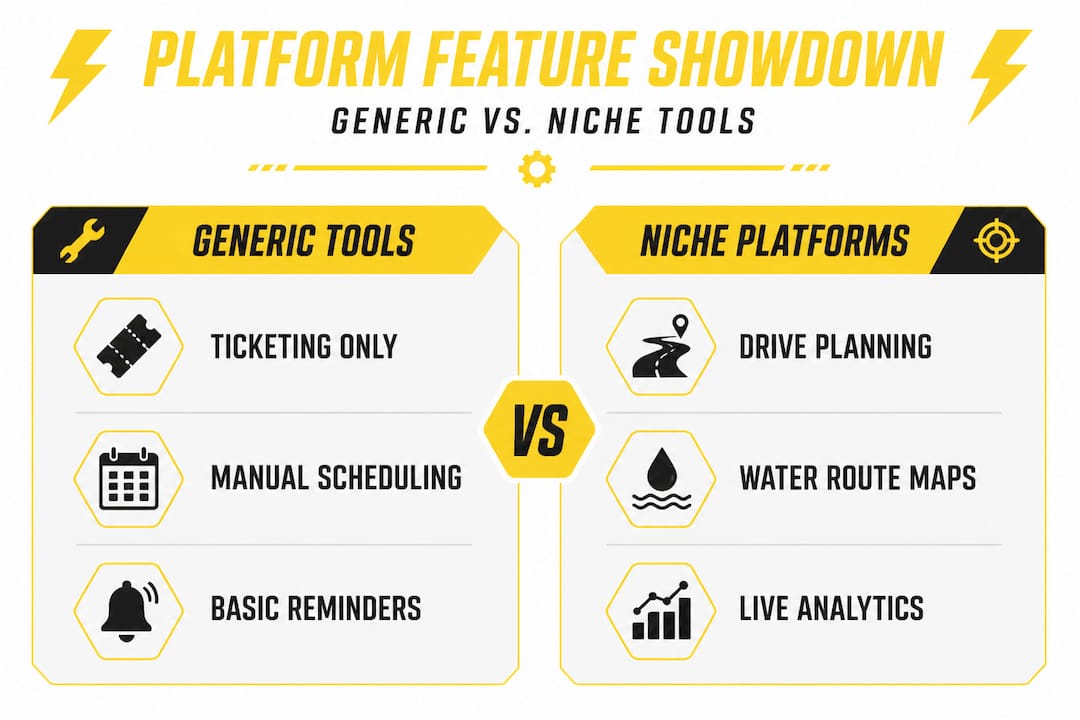
The expert take is equally clear: niche platforms outperform generic ones for automotive and water sports by including domain-specific tools like cruise planning and yacht scoring that simply don’t exist anywhere else.
When you’re thinking about promoting automotive events to grow your community, the platform you choose shapes every part of that promotional effort. A niche platform makes it easier to reach the right people, not just more people. If you’re ready to take the next step, tools designed to streamline car event planning can cut your admin time substantially.
Pro Tip: Choose platforms with built-in attendee chat to boost engagement before and after events. Pre-event conversation builds excitement and reduces drop-offs, while post-event chat keeps the community warm between gatherings.
Unlocking next-level planning with data and analytics
One of the most underrated advantages of using a dedicated event platform is the data it generates. Every registration, every click on a map, every ticket scan at the gate is a data point. And when that data is collected in a centralised system, it becomes one of the most powerful planning tools an organiser has.
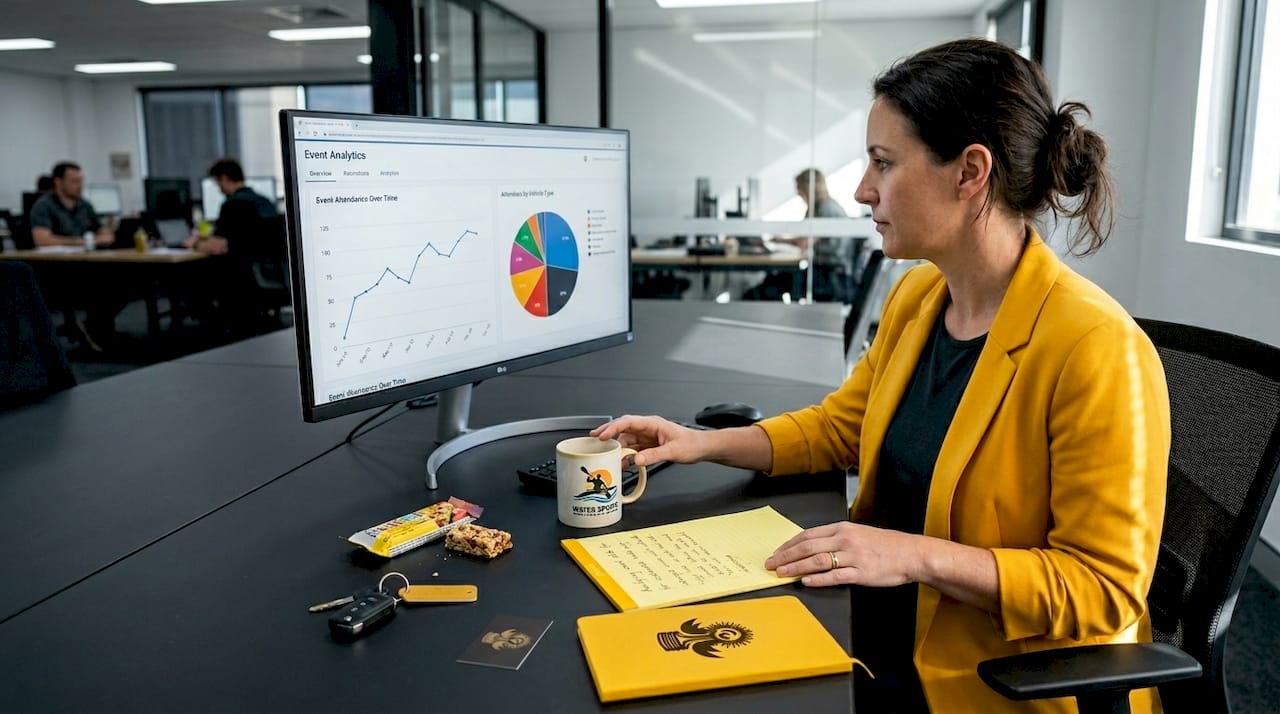
Centralised data analytics from registrations improve planning, personalise experiences, and measure return on investment for niche community events. This isn’t abstract theory; it’s practical intelligence that shows up in every decision you make about your next event.
Here’s a breakdown of the key analytics types and what they actually do for you:
Analytics type | What it tells you | Benefit |
Registration trends | When and how people sign up | Optimise your promotional timing |
No-show patterns | Which attendee segments drop off | Target reminders more effectively |
Revenue tracking | Which ticket types or upsells perform | Maximise income per attendee |
Feedback scores | Post-event satisfaction ratings | Identify what to improve or repeat |
Attendee behaviour | Session attendance, map views, chat activity | Personalise future communications |
The practical actions this data enables include:
Targeting promotions more precisely: If your analytics show that registrations spike on Thursday evenings, that’s when you release tickets or push event announcements.
Optimising your event schedule: If data reveals that a particular segment of your water sports programme empties out early, you know to restructure the timing next time.
Personalising attendee engagement: Sending tailored messages to first-time attendees versus regulars makes both groups feel recognised.
Measuring your return on investment: Platforms that track revenue alongside attendance costs give you a clear picture of whether your event is financially sustainable. Studies show that smart analytics use can deliver a 20% boost in event ROI compared to offline or manual tracking.
The difference between an organiser who uses data and one who doesn’t isn’t just efficiency. It’s the difference between building momentum and constantly starting from scratch. Platforms designed for event discovery for enthusiasts make this data visible and actionable without requiring any technical background. And if you’re looking to streamline event organisation across multiple gatherings through the year, analytics is the backbone of every good decision.
Hybrid solutions for the most demanding events
There are events where full automation simply isn’t the right answer. Think about a custom car show featuring hand-built vehicles, each with its own unique story and specification. Or a water sports gathering with high-profile sponsors who expect a personal relationship with the organising team. Or a multi-day cruise with route variations that change based on road conditions and participant preference. These situations benefit from the efficiency of a platform while also needing the nuance that only a human organiser can provide.
Hybrid manual-AI approaches preserve nuance while automating routine tasks, making them the smart choice for highly customised events with strong personal vendor ties. The key is knowing which tasks to automate and which to handle personally.
Here’s a practical approach to implementing a hybrid event organisation model:
Map every event task and categorise each one as either routine or relationship-dependent.
Automate all attendee-facing logistics: registrations, reminders, ticketing, map sharing, and post-event surveys.
Keep vendor coordination manual: Call your sponsors, meet your food truck operators, and personally brief your volunteer team leads.
Use platform tools for scheduling and scoring, but assign experienced judges or coordinators to make final calls in subjective categories.
Review platform analytics after the event to identify which manual touchpoints could be partially automated next time without losing quality.
Build a feedback loop where community input shapes next year’s programme, with your platform gathering the data and your team interpreting it.
This approach respects both the efficiency that technology offers and the authenticity that enthusiast communities genuinely value. For anyone organising social events at scale, hybrid methods represent the best of both worlds.
Pro Tip: Automate attendee management and communications, but keep custom judging or vendor coordination manual for best results. Your sponsors and community will notice the difference.
The hybrid approach also gives smaller organising teams the capacity to run events that would otherwise require a much larger crew. A two-person team using a smart platform can deliver the same quality experience as a six-person operation running on spreadsheets and group chats.
Why the best events blend tech with community
Here’s an opinion worth sharing: the biggest mistake organisers make when they adopt event platforms is expecting the technology to do too much of the heavy lifting. A slick registration system won’t compensate for a generic event experience. A live scoring feed means nothing if the vibe on the day is flat. The platforms are tools, and the best tools still require skilled hands to produce something worth remembering.
What separates a great car meet from an average one isn’t the software managing the gate. It’s the organiser who spent six weeks curating the car categories, sourcing a local food vendor who’s passionate about the scene, and creating a route that winds through genuinely beautiful roads. That passion can’t be automated. But it can be amplified enormously when routine tasks stop consuming all your energy.
The community is also a key ingredient that no platform can manufacture. The shared excitement of key automotive event differences that make gatherings feel special comes from the people involved and the culture they build together. Platforms enable those people to find each other, stay connected, and come back. But the relationships are human ones.
The most successful event organisers we see are the ones who treat their platform as a force multiplier. They use it to handle the administration so they can focus on the experience. They use the data to make smarter decisions, then bring their own creativity to bear on the parts that matter most. That balance is where the magic happens.
Total automation leads to events that feel corporate and cold. Pure manual organisation leads to burnout and preventable errors. The sweet spot is intentional: automate what scales, personalise what counts.
Next steps: Make your next event unforgettable
Whether you’re planning your first jetski meetup or you’ve been running cruise nights for years, the right platform changes everything about what’s possible. AutoSocial is built specifically for automotive and water sports communities, giving you the tools to discover events, manage your own gatherings, and stay connected with your community between meetups.
From private group chats and themed profiles to public and mystery events, AutoSocial brings your community together in ways that generic platforms simply can’t. If you’re ready to run more organised, better-attended, and more memorable events, explore the event organising tools available through AutoSocial and see what your community could look like with the right platform behind it. Your next great event is closer than you think.
Frequently asked questions
How do event organising platforms help reduce no-shows?
Automated reminders and attendee engagement features have cut no-shows by up to 50% for sports and car events, saving organisers significant time and money on the day.
What analytics do these platforms offer organisers?
They provide real-time insights on registration trends, attendee behaviour, ROI, and customised feedback, and centralised data from registrations helps organisers make smarter decisions for every future event.
Do niche platforms really offer better features than generic tools?
Yes. Niche platforms outperform generic ones for automotive and water sports by including tailored tools like drive planning and live scoring that no general-purpose solution offers.
When should I use hybrid event organisation methods?
Blend manual and automated methods for highly customised events that need personal relationships with vendors or unique programming, since hybrid approaches preserve nuance while still automating the routine logistics that consume your time.
Recommended


Comments