.png)


Drive local event success: guide for car & water sports

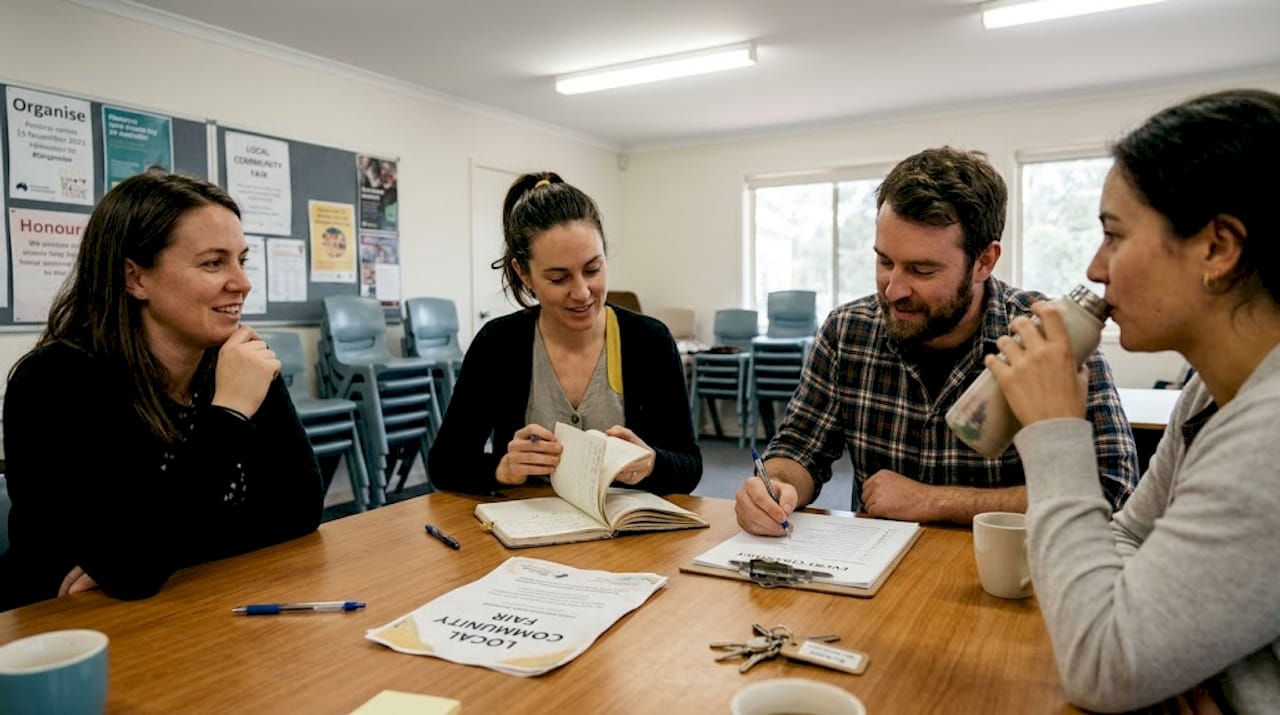
Picture this: a packed car park buzzing with engines, a waterway alive with jetskis, and a crowd that keeps coming back season after season. That is what smart local event promotion looks like for automotive and water sports communities. Getting there is not about a massive budget or viral luck. It is about laying the right groundwork, using the right channels, and building genuine community momentum. This guide covers exactly that, drawing on strategies tested by real event organisers across both niches, so you can run events that fill up, generate buzz, and grow your community year after year.
Table of Contents
Key Takeaways
Point | Details |
Start planning early | Begin outreach and logistics six months ahead for sponsors, permits, and strong community buy-in. |
Use hybrid promotion | Blend visual-heavy digital campaigns with local partnerships and offline tactics for maximum reach. |
Prioritise safety always | Insurance and rule enforcement are essential to protect your event and community. |
Engage post-event | Capture highlights, review feedback, and nurture attendees for repeat participation and word-of-mouth. |
Laying the groundwork: Planning and essentials
With a clear picture of event outcomes, smart planning ensures your promotion efforts have a solid foundation. Before a single flyer goes up or post goes live, the most successful organisers have already answered the big questions: What is this event actually for? Who is it for? What does success look like?
Start by defining your event objective. Are you growing a club, raising money for charity, or giving enthusiasts a hands-on experience day? Your answer shapes every decision that follows, from the venue you choose to the sponsors you approach. A memorable automotive event experience feels purposeful because the organiser knew their goal before they booked the space.
Local regulations are non-negotiable. Permits, public liability insurance, and safety requirements vary by council and waterway authority. Skipping these is not a shortcut; it is a risk that can shut your event down on the day. Check with your local council early, and if you are running a water sports event, contact the relevant maritime authority too.
Timing matters more than most organisers realise. For automotive events, a consistent monthly or weekly cadence builds habit and loyalty. For water sports, you are working around seasons, tourism peaks, and weather windows. Start planning six months early if you want sponsors and permits locked in without stress.
Bring partners in early. Local retailers, resorts, tourism organisations, and performance shops all benefit from association with a well-run event. Approach them with a clear value proposition, not just a sponsorship form.
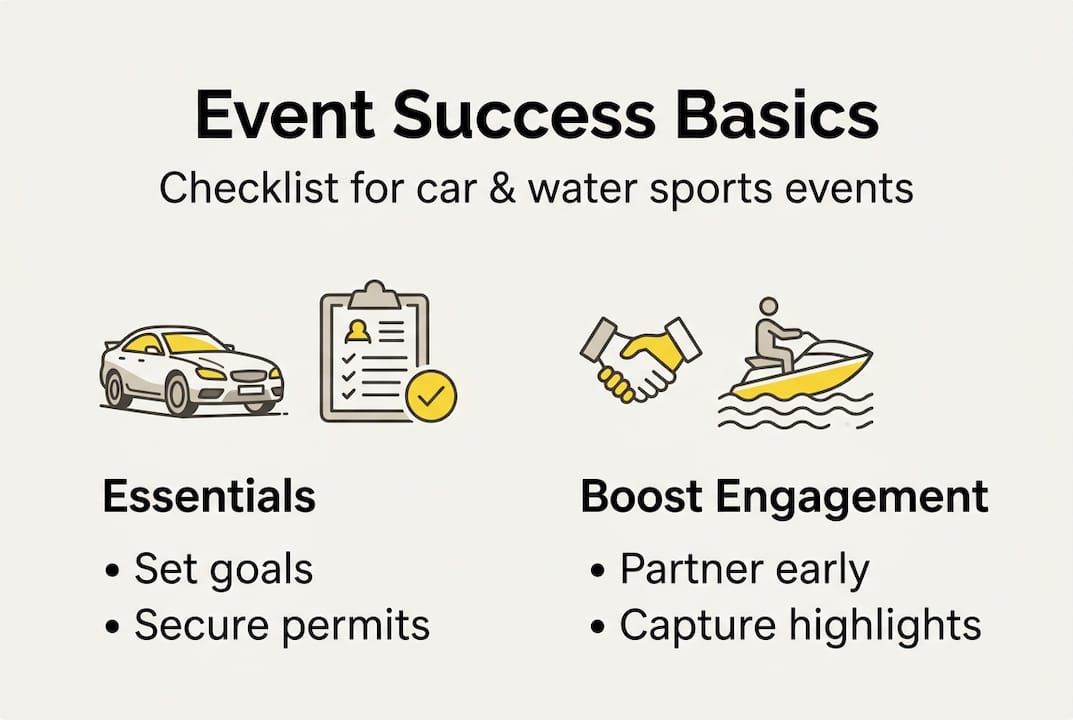
Here is a quick requirements table to keep your planning on track:
Element | Automotive events | Water sports events |
Venue | Car park, circuit, showground | Marina, beach, lake, waterway |
Insurance | Public liability, vehicle coverage | Public liability, rescue plan |
Permits | Council, traffic management | Maritime authority, council |
Support staff | Marshals, security, first aid | Water safety officers, first aid |
Lead time | 3 to 6 months | 4 to 6 months |
Key planning essentials to tick off:
Define a single clear event objective before anything else
Confirm venue availability and access requirements
Lodge permit applications at least 8 to 12 weeks out
Secure public liability insurance before promoting publicly
Identify two to three potential sponsors or partners early
Build a week-by-week outreach timeline
Review the car meet success essentials for a practical checklist that covers the basics many first-time organisers overlook.
Pro Tip: Create a shared planning document with your core team from day one. Assign owners to each task, set deadlines, and review it weekly. Events that fall apart usually do so because of communication gaps, not lack of enthusiasm.
Hybrid promotion strategies: Digital and local synergy
With the groundwork in place, you can now amplify your message by harnessing both online and offline channels. The most effective approach is not choosing one over the other; it is combining them deliberately.
Hybrid promotion using 60 to 70% digital visuals and 30% local offline engagement drives the strongest results for niche events. Digital channels give you reach; offline channels give you trust and local credibility.
For digital, focus on visual platforms. Instagram and TikTok reward short, exciting content. Facebook groups remain powerful for automotive and water sports communities because they already exist where your audience gathers. Post three to five times per week starting two to three months out for water sports events, and maintain a consistent daily or near-daily cadence for automotive meetups. Tease the venue, feature past highlights, and spotlight community members to keep the feed fresh.
Offline engagement is just as important. Distribute flyers at relevant retailers, car workshops, surf shops, and marinas. Talk to local radio stations and community noticeboards. These touchpoints reach enthusiasts who are not yet following your social accounts.
User generated content is one of the most powerful tools available. UGC boosts engagement by 40 to 60% compared to brand-only posts, and it creates genuine FOMO that draws in new attendees. Encourage your community to share their own content using a dedicated event hashtag.
“The events that sell out are the ones where the community feels like they own it, not just attend it.”
Build a mailing list from your first event. An email list gives you a direct line to your most engaged supporters, independent of algorithm changes. Use it for early-bird registration, exclusive updates, and post-event recaps.
Here is a sample promotion calendar for an event eight weeks out:
8 weeks out: Announce the event, open registrations, post teaser content
6 weeks out: Feature sponsor spotlights, share past event highlights
4 weeks out: Launch a photo or video contest for pre-event buzz
2 weeks out: Countdown posts, share attendee spotlights, push offline flyers
1 week out: Final reminder, share logistics, encourage RSVPs
Day before: Hype post, last-chance registration push
Explore more water sports event ideas to find creative promotion angles that work specifically for paddleboarding, jetski, and other water-based gatherings. For automotive event activity ideas, the AutoSocial platform has resources tailored to car and motorcycle communities.
Pro Tip: Run a short video contest in the two weeks before your event. Ask entrants to share a 15-second clip of their vehicle or watercraft with your event hashtag. The best entries get featured on your main account, which rewards participants and generates organic reach at the same time.
Safety, flexibility, and community: Overcoming common pitfalls
Even the best-planned promotions fail without safety, flexibility, and strong community rules. Here is how to lock these in before they become problems.
Safety and insurance are non-negotiable for both automotive and water sports events. One serious incident without proper coverage can end your event permanently and expose you to significant legal liability. This is not an area to cut corners.
For automotive events, a clear no-burnout and no-reckless-driving policy protects everyone and keeps your venue relationships intact. For water sports, you need a documented rescue plan, designated safety officers on the water, and weather monitoring protocols in place.
Weather dependencies in water sports require flexible plans that you communicate clearly to attendees in advance. Have a rain date, a postponement policy, and a list of alternative activities ready to go.
Here is a comparison of key safety considerations across both niches:
Safety area | Automotive events | Water sports events |
Insurance | Public liability, vehicle incident | Public liability, rescue operations |
Traffic and crowd control | Marshals, designated entry/exit | Water safety officers, exclusion zones |
Venue management | Capacity limits, no-burnout zones | Weather monitoring, alternative sites |
Emergency response | First aid on site, incident plan | Water rescue plan, first aid on shore |
Common pitfalls to avoid and how to address them:
Skipping insurance because the event feels informal. Get covered regardless of size.
Overcrowding the venue by over-promoting without capacity controls. Set a hard cap and use RSVP management.
Ignoring community moderation. Enforce rules consistently from the first event, not just when problems arise.
No weather contingency for water sports. Publish your policy before tickets go on sale.
Unclear parking or access plans for automotive events. Brief marshals thoroughly and post signage.
Failing to brief sponsors and partners on safety policies. Everyone on site needs to know the rules.
“A community that feels safe comes back. A community that feels managed, not policed, thrives.”
Review safety tips for car meetups for a detailed breakdown of what responsible event management looks like in practice. For event guideline examples tailored to automotive and water sports communities, AutoSocial provides templates that take the guesswork out of rule-setting.
Maximising engagement and momentum: During and after the event
With safety and flexibility managed, your engagement approach will determine lasting impact and community growth. The event itself is only half the story. What you do on the day and in the 48 hours after shapes whether attendees become regulars or one-time visitors.
Capture highlights as they happen. Assign someone specifically to photography and short video on the day. Live-streaming a portion of the event, even just 15 to 20 minutes, signals to your online audience that something real and exciting is happening right now. This drives FOMO and builds anticipation for the next event.
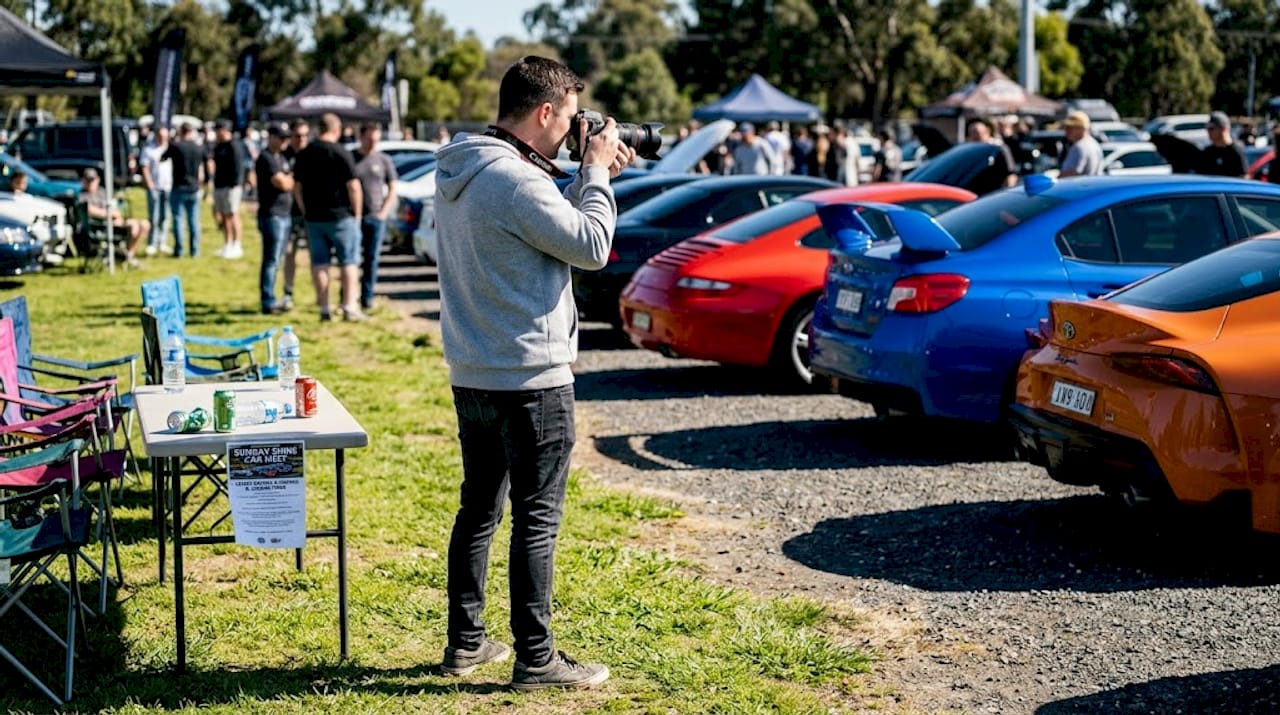
Post-event recaps within 24 hours build anticipation for the next event and keep the community conversation alive. A well-edited photo gallery or a two-minute highlight reel posted the morning after does more for your next event than any paid ad.
Send a thank-you message to every registered attendee within 24 hours. Include a short survey asking what they loved and what they would change. This data is gold for your next event, and the act of asking makes attendees feel valued.
Track more than just attendance by following RSVP conversion rates, social engagement on recap posts, sponsor ROI, and return interest from attendees. These metrics tell you what is actually working.
Key follow-up steps after every event:
Post a photo and video recap within 24 hours across all channels
Send personalised thank-you emails to attendees and sponsors
Share a post-event survey for feedback
Feature top community content and tag contributors
Announce the next event date or tease what is coming
Community building tactics that keep momentum going:
Create a dedicated group chat or private community for regulars
Run monthly or seasonal themed events to maintain a calendar rhythm
Recognise top contributors publicly on your channels
Offer early access or perks to returning attendees
Pro Tip: Turn your most consistent attendees into volunteer leaders. Give them a role, a title, and a sense of ownership. They become your best promoters and your most reliable support crew, and they will recruit others like them.
For more post-event engagement techniques built specifically for automotive and water sports communities, AutoSocial offers tools that make follow-up seamless. You can also study marina SEO success as a case study in how consistent digital presence builds long-term community loyalty.
What most guides miss about local event promotion
Having explored the building blocks for success, here is a crucial truth most local event guides miss: sustained buzz has almost nothing to do with ad spend.
The organisers who run thriving events year after year are not the ones with the biggest marketing budgets. They are the ones who show up consistently, enforce their community standards, and make every attendee feel like a valued part of something real. Word-of-mouth from a genuinely satisfied community member is worth more than any paid campaign.
Most guides focus on tactics. They tell you to post on Instagram, hand out flyers, and get sponsors. All of that matters. But the actual differentiator is whether your attendees feel like heroes of the event or just spectators. When someone shares a photo from your event because they are proud to have been there, that is the signal you have built something worth coming back to.
Consistency and authenticity outlast gimmicks every time. Organisers who create space for feedback, grow community leaders from within, and show up with the same energy for their fifth event as their first are the ones who build something lasting. One-off attendance spikes fade. A loyal community compounds.
Take your next event further with expert support
Ready to transform your next event with expert support? Running a standout automotive or water sports event is far easier when you have the right platform behind you.
AutoSocial event solutions give organisers a centralised hub for discovering, planning, and promoting local car meets, cruises, jetski meetups, and water sports gatherings. From event templates and activity idea guides to private group chats and community management tools, AutoSocial is built specifically for enthusiasts who want real-world results without the chaos of scattered Facebook groups or outdated forums. Whether you are running your first event or your fiftieth, the platform connects you with a community that is already looking for exactly what you are building.
Frequently asked questions
What is the most effective way to promote a local car or water sports event?
A hybrid approach of 60 to 70% digital visuals combined with 30% local offline engagement consistently delivers the highest attendance and community engagement for niche events.
How early should I start planning and promoting my local event?
Begin at least six months in advance to give yourself enough time to secure permits, lock in sponsorships, and build genuine promotional momentum before the event date.
How do I handle last-minute weather or safety issues?
Have a documented contingency plan ready before you open registrations, including alternative dates and clear insurance coverage for weather risks, so attendees know exactly what to expect if conditions change.
What is the best way to keep participants engaged after the event?
Send thank-you messages and share content recaps within 24 hours, then invite attendees into your ongoing community. Post-event follow-up builds repeat engagement and turns one-time visitors into loyal regulars.
Recommended


Comments